The Kitchen Confession
Rachel asked me to meet her at her place on a Tuesday afternoon, which was unusual because we usually grabbed coffee on weekends. When I walked into her kitchen, I barely recognized her. She'd always been thin, but now she looked skeletal, her collarbones jutting out beneath a silk scarf wrapped around her head. 'I need to tell you something,' she said, and her voice cracked in a way I'd never heard before. She sat down heavily at the kitchen table, like standing took too much effort. I sat across from her, my stomach already twisting into knots. 'I have stage four cancer,' she said flatly. 'They found it six months ago. It's in my lungs, my liver, everywhere.' I felt the room tilt. Rachel was my best friend, had been since college. We'd survived bad boyfriends, terrible jobs, her two pregnancies. 'There's no treatment plan that makes sense anymore,' she continued, tears streaming down her pale face. Then she looked at me with those hollow eyes and asked if I would take Mason and Ellie if something happened to her. When Rachel asked if I would take Mason and Ellie if something happened to her, I felt fate reaching through tragedy—I had no idea I was being handed a script.
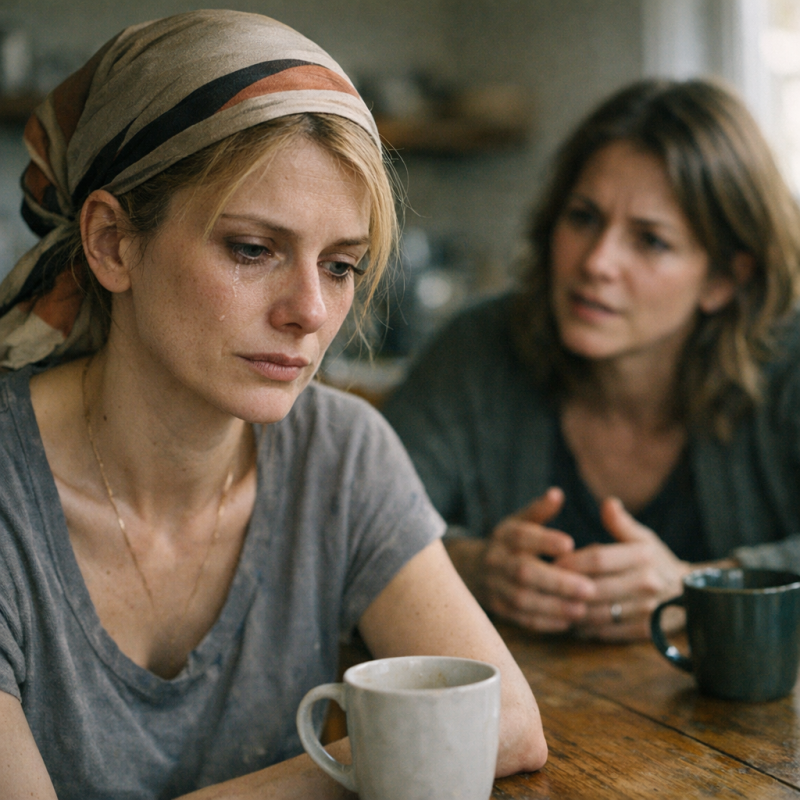 Image by FCT AI
The Yes That Changed Everything
I said yes before she even finished the question. 'Of course,' I told her, reaching across the table to grab her bony hand. 'Of course I'll take them.' Rachel broke down completely, sobbing into her palms, and I moved around to hold her while she shook. The truth is, saying yes felt like the universe finally answering a prayer I'd stopped saying out loud. My ex-husband Mark and I had tried for years to have kids before infertility and resentment tore us apart. The divorce was finalized two years ago, and I'd made peace with never being a mother. Or so I thought. Mason was nine and Ellie was six, and when Rachel called them into the kitchen to tell them 'Aunt Jenna is going to help take care of you,' they both looked terrified. Ellie's bottom lip trembled. Mason wrapped his arm around his little sister protectively. Rachel explained through tears that she was very sick, and they needed to be brave. I watched those two scared kids trying to process something no child should have to understand. I told her yes before she even finished asking, never imagining that single word would unravel everything I thought I knew about my best friend.
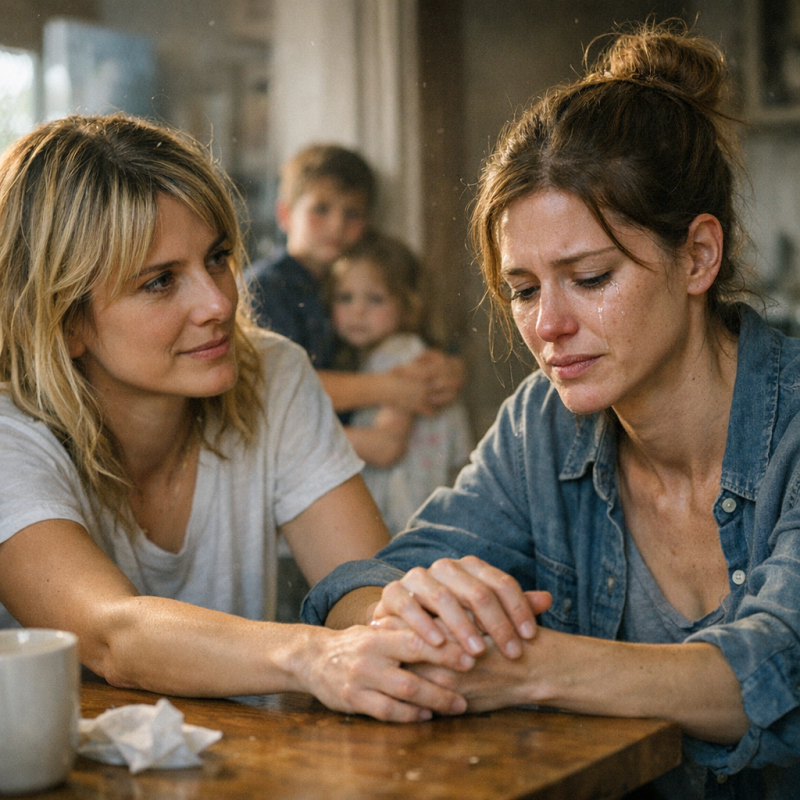 Image by FCT AI
The Medical Folders
The next time I came over, Rachel had three manila folders waiting on her kitchen counter. 'I wanted you to see everything,' she said quietly, sliding them toward me. Inside were pages and pages of medical documents—pathology reports with words like 'adenocarcinoma' and 'metastatic,' lab results with numbers circled in red, imaging reports describing masses in her chest and abdomen. My hands shook as I flipped through them. It all looked horrifyingly official. Hospital letterheads, doctor signatures, dates spanning the last several months. 'Why aren't you doing chemo?' I asked, because that seemed like the obvious question. Rachel wrapped her arms around herself. 'I did two rounds,' she said. 'It made me so sick I couldn't take care of the kids, and the oncologist said it would only buy me a few months at best. I'd rather spend whatever time I have left actually present with Mason and Ellie, not vomiting in a hospital bed.' It made sense in a heartbreaking way. I wanted to argue with her, to insist she fight harder, but who was I to tell a dying woman how to face death? The paperwork looked official enough that I never thought to verify a single page—my first mistake in a series I wouldn't recognize until it was far too late.
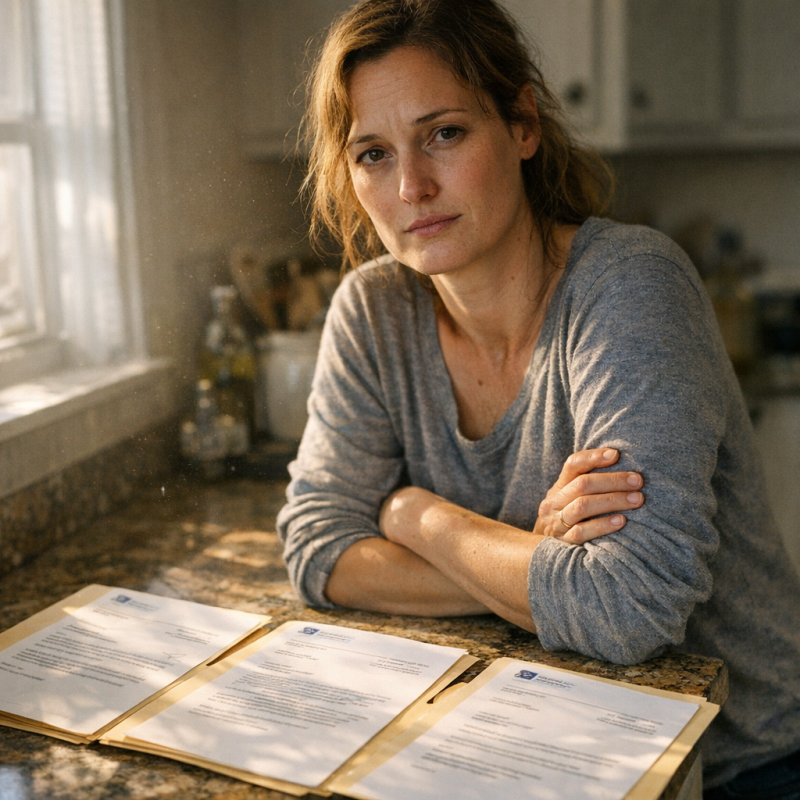 Image by FCT AI
Meeting the Kids Properly
That weekend, I came over to spend the afternoon with the kids while Rachel rested. Mason was quiet and watchful, the way nine-year-old boys get when they're trying to be tough. He showed me his LEGO collection but kept glancing toward Rachel's bedroom door like he was afraid she might disappear. Ellie was different—still young enough to be open, to crawl into my lap on the couch and ask questions. 'Are you going to be our new mommy?' she asked, her small fingers playing with my bracelet. 'I'm going to take care of you,' I said carefully, looking at Rachel for guidance. Rachel nodded from the doorway, her eyes wet. 'Aunt Jenna loves you both very much.' We made cookies together that afternoon, and Ellie stood on a step stool beside me, carefully dropping chocolate chips into the dough. 'Do they have playgrounds in heaven?' she asked suddenly, and I had to set down the mixing bowl because my vision went blurry with tears. Mason shot his sister an angry look, like the question was forbidden. Ellie climbed into my lap and asked if heaven had playgrounds, and my heart broke for children who had no idea their mother was planning something far worse than death.
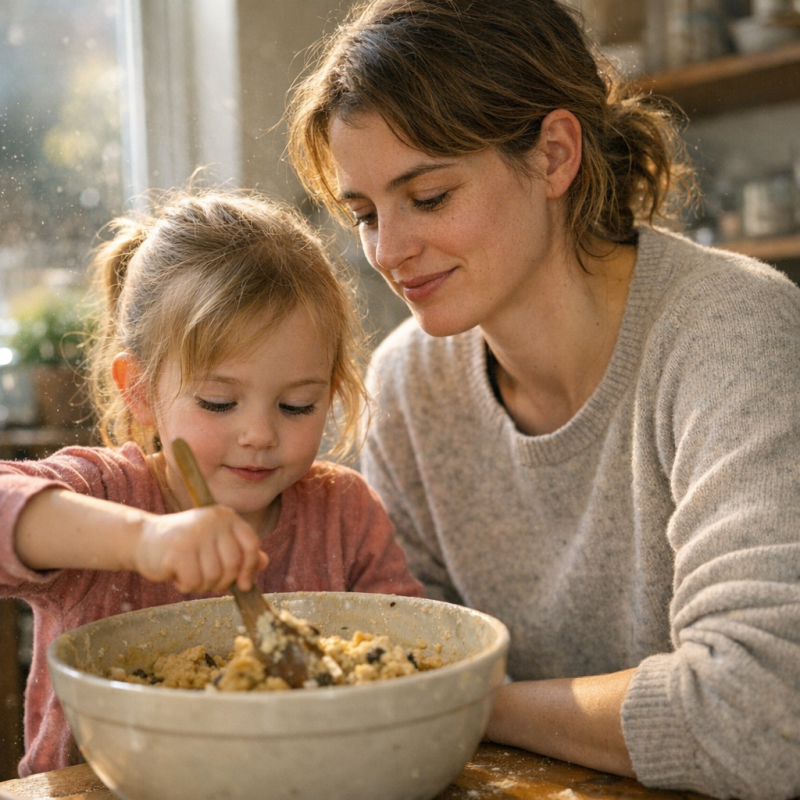 Image by FCT AI
The Father Who Wasn't There
Later that week, after the kids went to bed, I asked Rachel about their father. It seemed important to know if he might suddenly appear and complicate the guardianship arrangement. Rachel's entire demeanor changed instantly. Her face went hard, her shoulders tensed. 'He was a mistake,' she said coldly. 'We dated for about six months when I was pregnant with Mason. He stuck around for a bit after Mason was born, but he left before I even knew I was pregnant with Ellie.' The way she said it felt final, like a door slamming shut. 'Does he know about the kids?' I pressed gently. Rachel stood up and walked to the window, her back to me. 'He signed away his parental rights years ago. No child support, no contact, nothing. He doesn't get a say in any of this.' I wanted to ask more—his name, where he lived now, whether he knew Rachel was sick—but something in her posture warned me off. I figured it was an old wound, the kind that never really heals. When I asked about their father, Rachel's expression went cold and distant—I assumed it was old pain, not a carefully maintained lie.
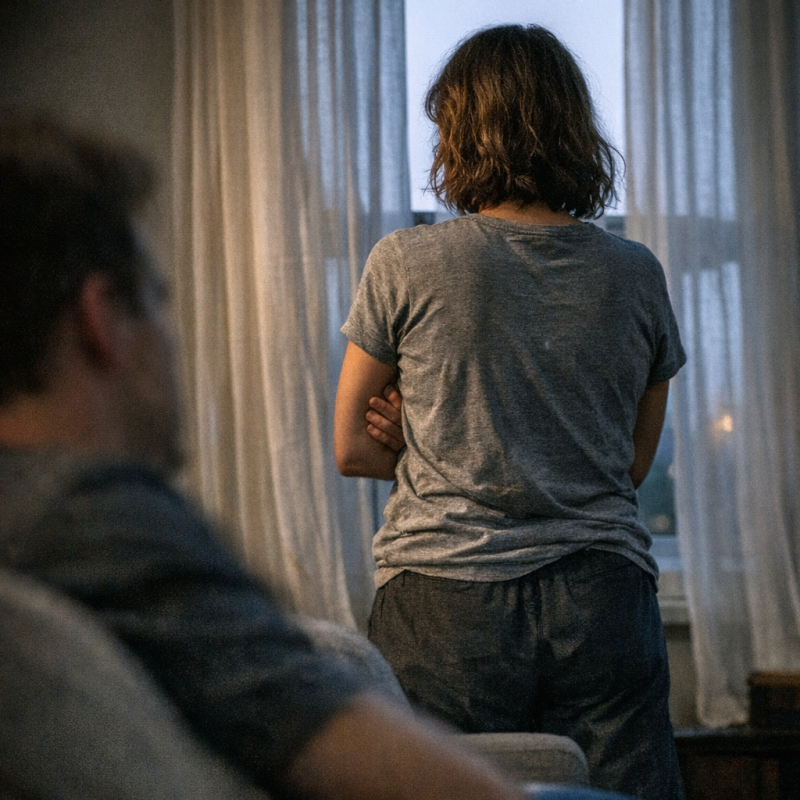 Image by FCT AI
Legal Documents
Rachel's lawyer was a woman named Sandra who worked out of a small office downtown. We met there on a Thursday morning, and I'd never felt anything so surreal as signing paperwork that planned for my best friend's death. Sandra explained that we were establishing temporary guardianship initially, which would convert to permanent custody after Rachel passed. 'This ensures continuity for the children,' Sandra said in a practiced, gentle tone. 'They won't be placed in state care or with distant relatives.' Rachel cried through the entire appointment, her signature shaky on every document. I held her hand between pages, trying to be strong for her even though I felt like I was drowning. Sandra asked questions about my financial situation, my living arrangements, my background check clearance. Everything moved quickly because, as Sandra put it delicately, 'given the circumstances, time is a factor.' I felt honored, honestly. Of everyone Rachel could have chosen, she'd chosen me. She trusted me with the most precious things in her life. Rachel cried as we signed the documents, and I held her hand, believing we were racing against death when we were actually following her timeline exactly.
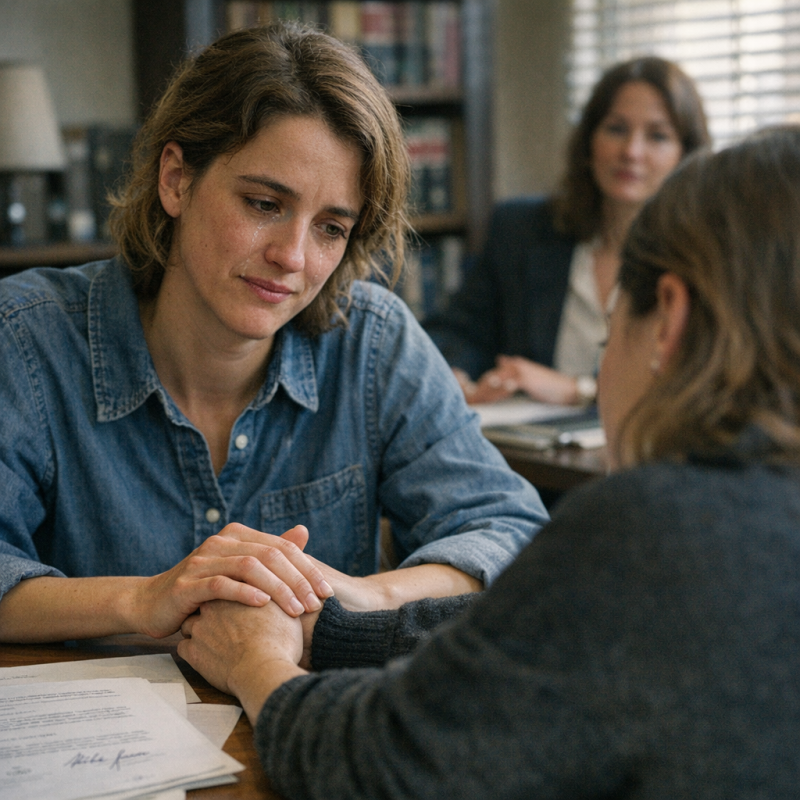 Image by FCT AI
Moving In Slowly
After the legal paperwork was filed, I started spending more and more time at Rachel's house. At first it was just dinners a few times a week, helping get the kids bathed and ready for bed. Then it became staying over on weekends when Rachel said she was too exhausted to manage alone. I started keeping spare clothes in her guest room, toiletries in the bathroom. It felt natural, like sliding into a role I'd been preparing for my whole life without knowing it. I'd cook breakfast while Rachel slept late, help Mason with his homework at the kitchen table, read bedtime stories to Ellie in her little pink bedroom. 'You're so good at this,' Rachel told me one evening, watching me braid Ellie's hair before bed. There was something in her expression I couldn't quite read—relief, maybe, or satisfaction. The kids started calling me to solve their problems instead of Rachel. When Ellie had a nightmare, she came to my room. When Mason needed someone to sign his permission slip, he brought it to me. I started keeping spare clothes at Rachel's place, cooking dinners, tucking the kids in—becoming their mother before their real one had even left.
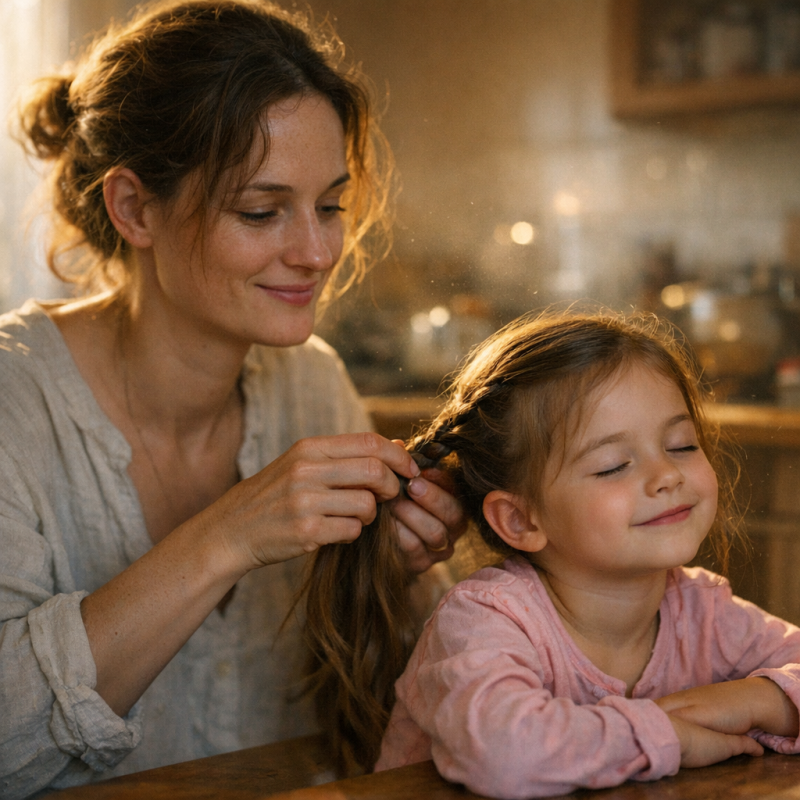 Image by FCT AI
The Appointment She Wouldn't Share
About six weeks after our lawyer meeting, Rachel had what she called an important oncology appointment. 'Just a check-in,' she said vaguely. I offered to drive her, to come inside and talk to the doctors myself, to understand what we were facing in terms of timeline. Rachel's response was immediate and firm. 'No,' she said, not meanly but with absolute finality. 'I need to do this alone. It's too overwhelming having someone else there, hearing everything twice.' I backed off, feeling guilty for pushing. Everyone handles medical trauma differently, I reminded myself. Some people need support, others need privacy. But something about it nagged at me as I watched her drive away that morning. She was going to a clinic across town I'd never heard of, not the big hospital whose letterhead was on all her paperwork. When I mentioned that, she explained they specialized in palliative care. It made sense, I guess. When I offered to come inside the clinic with her, Rachel's refusal was immediate and firm—something about it felt off, but I told myself grief made people private.
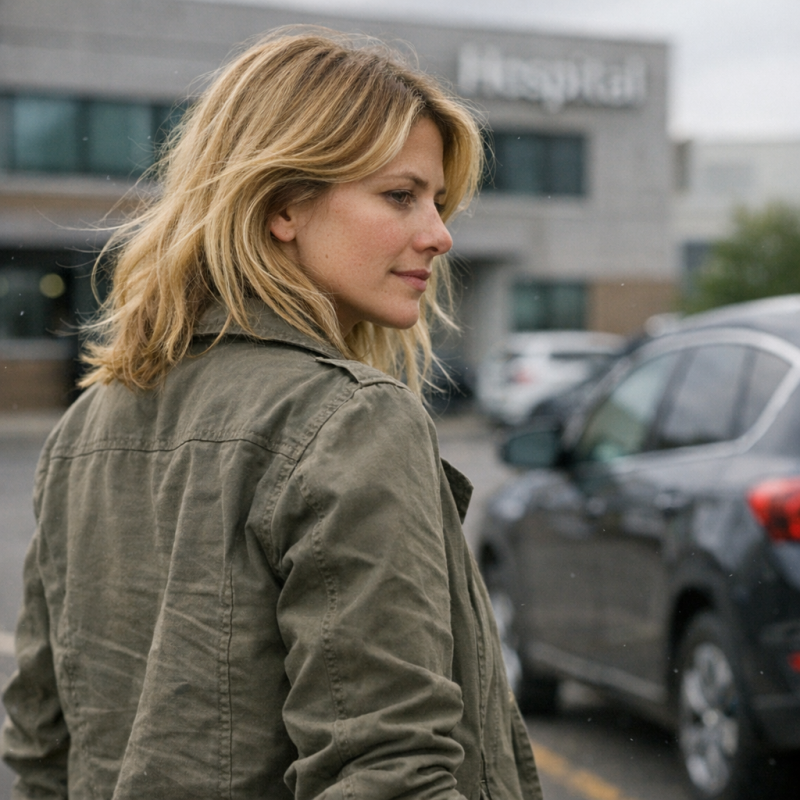 Image by FCT AI
Mason's Questions
Mason found me folding laundry in Rachel's living room about a week later. He stood in the doorway for a long moment before speaking, and when he did, his voice was so quiet I almost didn't hear him. 'Jenna, what happens when someone dies?' he asked. 'Like, where do they go?' I sat down on the couch and patted the spot next to me, my heart breaking. He climbed up and curled into my side, and I tried to give him an answer that wasn't too religious or too final, something about love staying even when people leave. Then he asked the harder question. 'Will we have to go live with strangers? Will Ellie and I get separated?' I pulled him closer and felt him trembling. 'No, sweetie,' I said firmly. 'You're staying with me. Both of you. Forever.' He looked up at me with those serious brown eyes. 'You promise? You really promise?' I kissed the top of his head and swore it without a single second of hesitation. Mason asked if I would really keep them forever, and I promised yes without hesitation—a promise I would keep even after discovering it was exactly what Rachel had counted on.
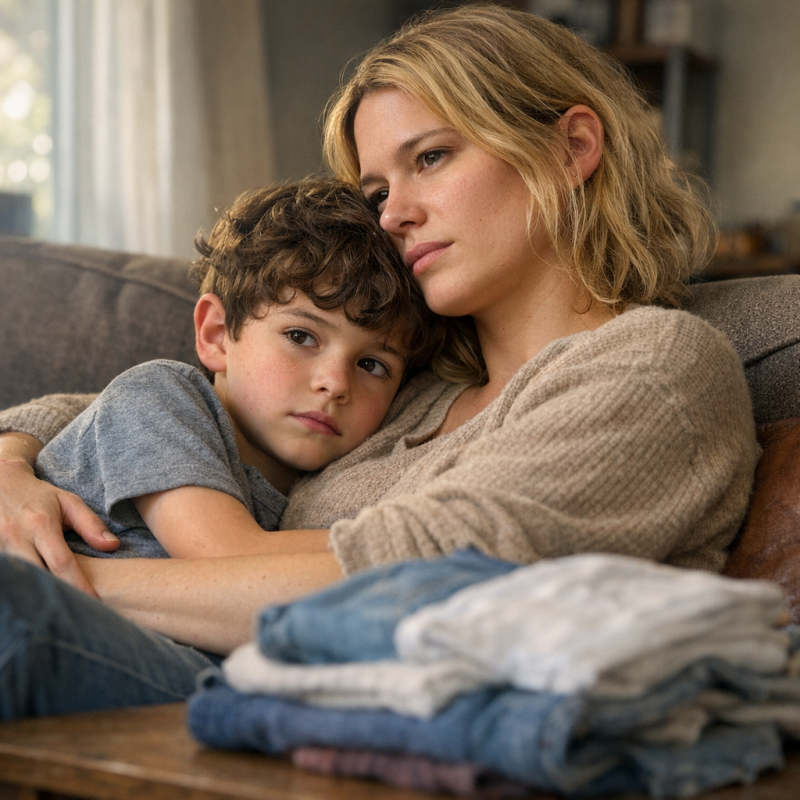 Image by FCT AI
The Fundraiser Shutdown
A few days later, I brought up the idea of organizing a fundraiser. Rachel's medical bills had to be astronomical, and I knew our community would rally to help. 'Maybe we could do a silent auction,' I suggested, 'or even just a GoFundMe. People want to support you.' Rachel's face changed instantly. 'No,' she said, almost sharp. 'I don't want that. I don't want people's pity money.' I tried again, gentler this time. 'What about a second opinion? There are specialists, clinical trials, cutting-edge treatments. Let me help you research options.' She shook her head more firmly. 'I've already explored everything. The doctors are clear. I'm not spending my last months being a guinea pig or chasing false hope.' It made sense on the surface—dignity, acceptance, all that. But something about how quickly she shut me down felt strange. When someone's dying, don't you at least consider every option? Don't you want your kids to see you tried everything? I didn't push, though. Rachel shut down my offer to help with medical costs so quickly and completely that I wondered why someone dying would reject hope—but I didn't push.
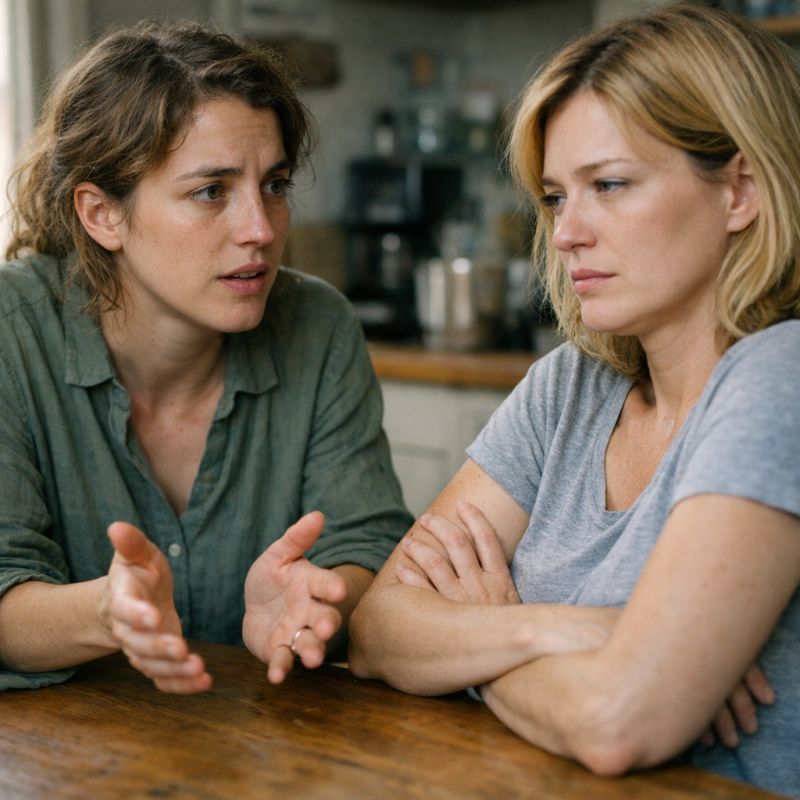 Image by FCT AI
Ellie's Nightmares
Ellie's scream woke me at two in the morning. I was sleeping in Rachel's guest room by then, just to be available, and I rushed to the kids' room to find Ellie sitting up in bed, sobbing hysterically. Mason was already awake, trying to comfort his sister but looking terrified himself. 'Monsters,' Ellie wailed. 'Monsters are taking Mommy away!' I scooped her up and carried her to the rocking chair, holding her tight against my chest. Her little body shook with each sob, her fingers clutching my shirt like I might disappear too. 'No monsters, sweetheart,' I whispered. 'I promise. No monsters.' But how do you explain terminal cancer to a six-year-old? How do you make that less scary than monsters? I rocked her for over an hour, singing soft songs, stroking her hair. Rachel never came to check on her—I heard her bedroom door stay closed the whole time. Eventually Ellie fell asleep in my arms, exhausted from crying. I held Ellie while she sobbed about monsters taking her mommy away, and I swore to protect her—not knowing her mother had created the real nightmare.
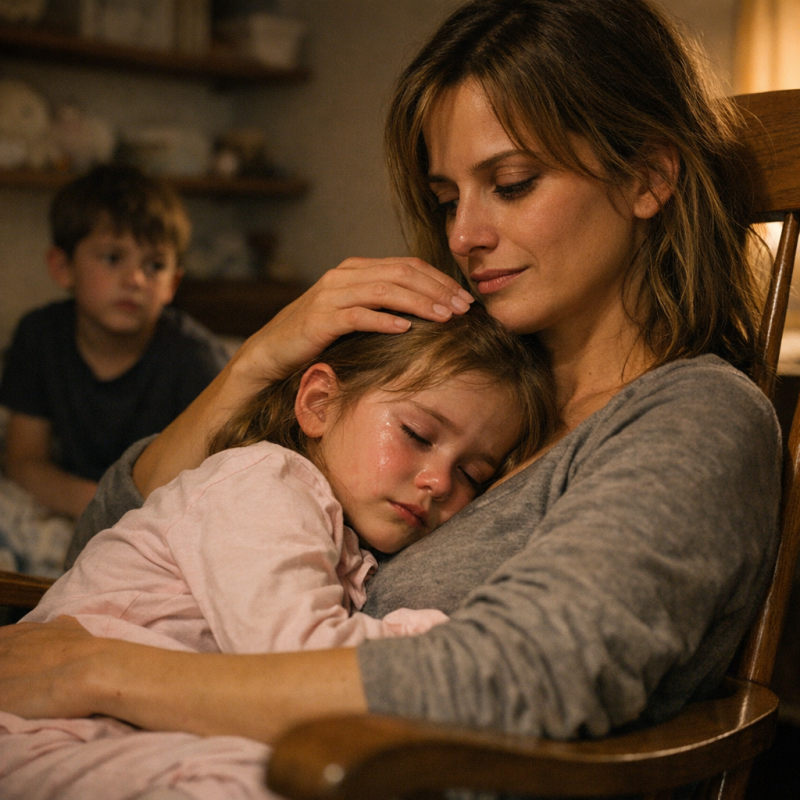 Image by FCT AI
The Rapid Decline
Over the next three weeks, Rachel's decline seemed to accelerate. She started sleeping until noon, then one, then not getting up at all some days. Her appetite disappeared—I'd bring her soup and find it untouched hours later. She moved slower when she did get up, one hand braced against walls, wincing like everything hurt. The kids tiptoed around the house, terrified of disturbing her. I took over meals completely, handled bedtime routines, drove Mason to school every morning. Rachel would emerge occasionally, pale and drawn, to hug the kids or murmur something about being sorry. 'Don't apologize,' I told her every time. 'Save your energy.' She'd smile weakly and retreat back to her bedroom. It all looked exactly like what I'd seen with my grandmother's final months—the fatigue, the pain, the gradual withdrawal from life. Every symptom fit perfectly with what I'd read online about advanced cancer. The hospice nurse I'd researched said these were classic end-stage signs. Rachel started sleeping more, eating less, moving slower—every symptom textbook-perfect for someone dying, and I never questioned how rehearsed it all looked.
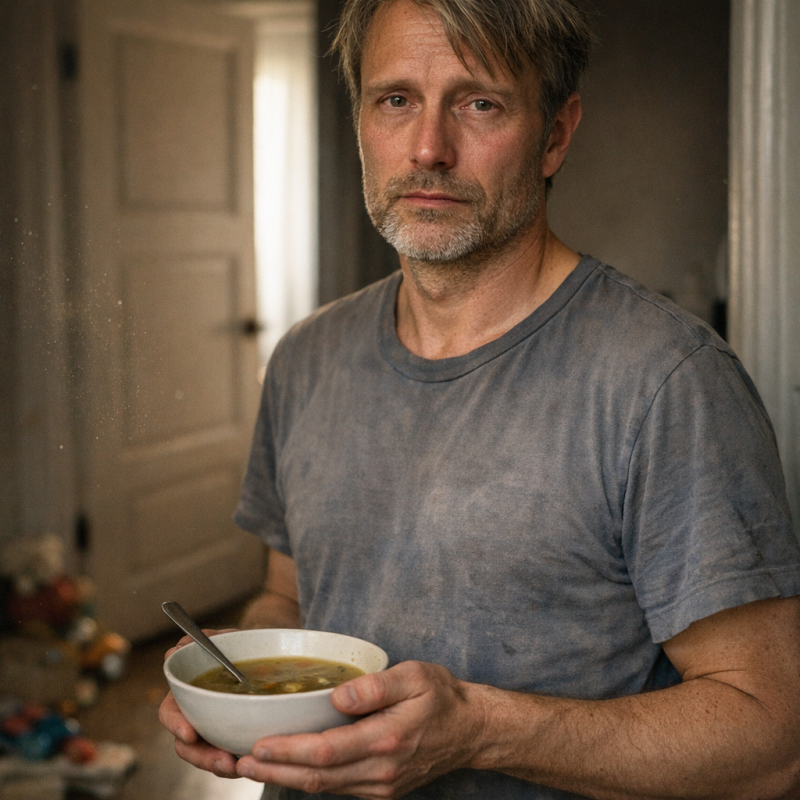 Image by FCT AI
The Adoption Process Begins
The court hearing was brief and surprisingly emotional. Our lawyer had prepared all the paperwork, and Rachel had signed everything in advance—she was 'too weak' to attend in person, the lawyer explained to the judge. I sat at the table alone, answering questions about my employment, my home, my relationship with the children. The judge, an older woman with kind eyes, reviewed the medical documentation and Rachel's notarized consent. 'This is a tragic situation,' she said softly, 'but it's clear these children are loved. Ms. Parker, you're doing a beautiful thing.' She approved the petition right there, setting a timeline for the adoption to finalize after Rachel's death. I should have felt triumphant, but instead I just felt hollow. When I got back to Rachel's house, I told her the good news. She cried and squeezed my hand. 'Thank you,' she whispered. 'Thank you for giving me peace.' I cried too, thinking about how lucky the kids were to have a mother who'd planned so carefully for them. The judge approved our petition with sympathetic eyes, calling it 'a beautiful act of love'—none of us knew we were participating in an escape plan.
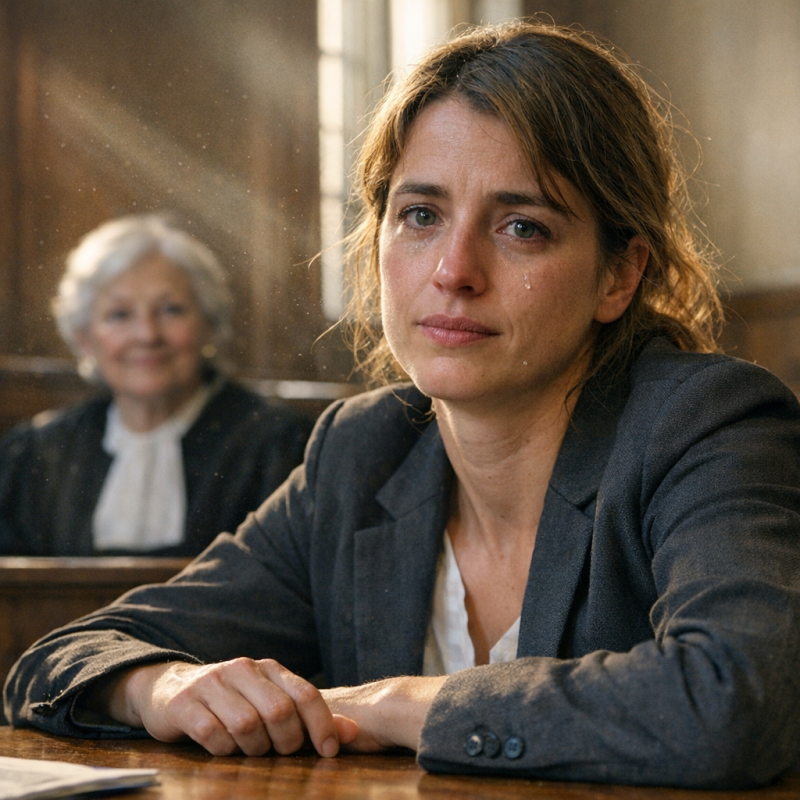 Image by FCT AI
A Call From the Past
David's call came on a Tuesday evening while I was making dinner. I almost didn't answer the unfamiliar number, but something made me pick up. 'Jenna? It's David.' My ex-husband's voice after two years of silence was jarring. We'd ended things civilly enough—no kids, no shared property beyond what we'd already divided—but we'd agreed a clean break was healthier. 'David. Hi. Why are you calling?' There was a pause. 'I heard about Rachel. Through some mutual friends from the old neighborhood. I'm so sorry. I know you two were close.' My grip tightened on the phone. How did he even know about Rachel? We'd lived in different circles by the time he and I split. 'Yeah, it's been really hard,' I said carefully. 'She's got maybe a few months.' Another pause, longer this time. 'If you need anything,' he said, but his tone was off. Not sympathetic exactly. Something else I couldn't identify. 'Thanks, but I'm managing,' I said quickly. David's voice on the phone was the last thing I expected—he said he'd heard about Rachel through old friends, and something about his tone made my stomach turn.
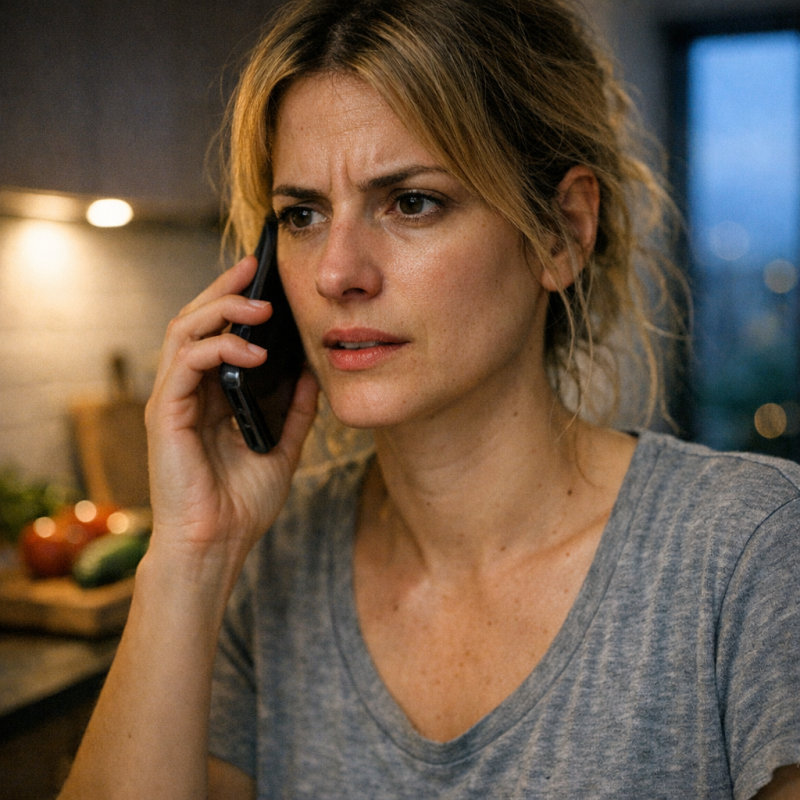 Image by FCT AI
Rachel's Final Wishes
Rachel wanted to plan her funeral. She insisted on it one afternoon, calling me to her bedroom with a notebook full of details she'd written out. 'I need you to promise you'll follow this exactly,' she said, her voice weak but determined. She wanted a small service, just close friends. No elaborate ceremony. She'd already picked out a casket—mid-range, nothing fancy—and had me write down the name of a specific funeral home across town. Then came the detail that made my chest tighten. 'Closed casket,' she said firmly. 'I don't want people seeing me like this. The illness has been so hard on my body, Jenna. I want people to remember me as I was.' I understood—or thought I did. Vanity isn't shallow when you're dying. Dignity matters. I wrote it all down, tears dripping onto the notebook paper. She made me read it back to her twice, correcting small details. The hymns. The flowers. Who should speak. It felt so final, so real. Rachel insisted on a closed casket because 'the illness had been hard on her physically'—a detail I would later realize was critical to her disappearance.
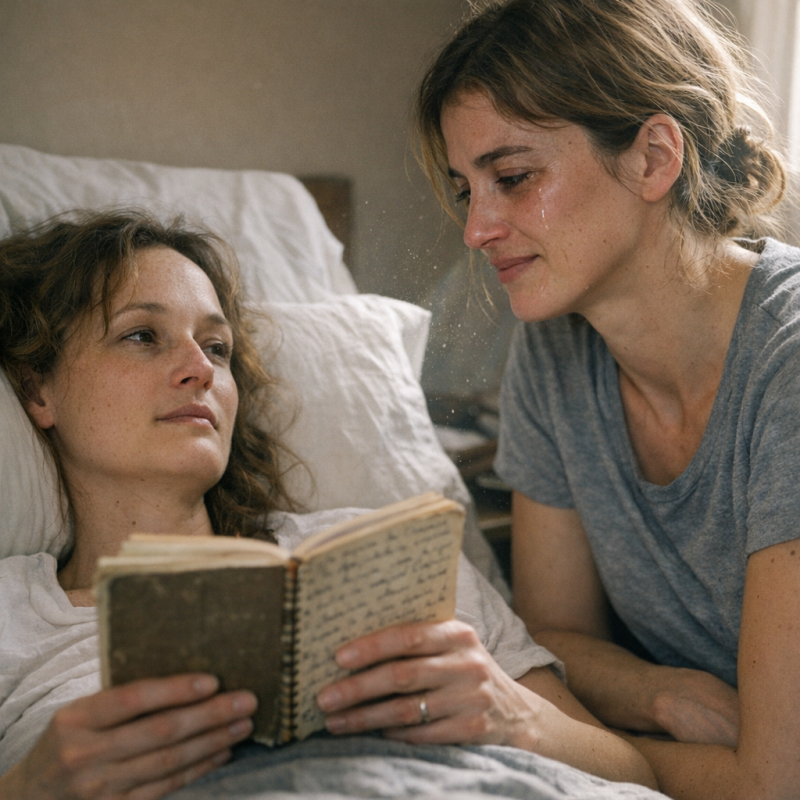 Image by FCT AI
The Last Good Day
Rachel surprised everyone by asking to take the kids to the park one last time. It was a Saturday morning, unseasonably warm for late fall, and she seemed to have a burst of energy. 'Just us,' she told me. 'One last good memory.' I drove them but stayed in the car, watching from the parking lot because she'd asked me to give them space. Rachel pushed Ellie on the swings while Mason climbed the jungle gym, and from that distance she looked almost healthy. Almost like her old self. She was laughing, and the kids were laughing, and for a moment it felt like maybe we'd all imagined the worst parts. But then I saw Rachel's face when the kids ran ahead to the slide. The smile dropped completely. She stood there alone by the swings, staring at nothing, and her expression was strange. Not sad exactly. More like... resolved. Like someone who'd finished a difficult task and could finally rest. Or maybe like someone saying goodbye forever—not to life, but to a burden. I watched Rachel push Ellie on the swings one last time, and the way she smiled felt like goodbye—or maybe relief.
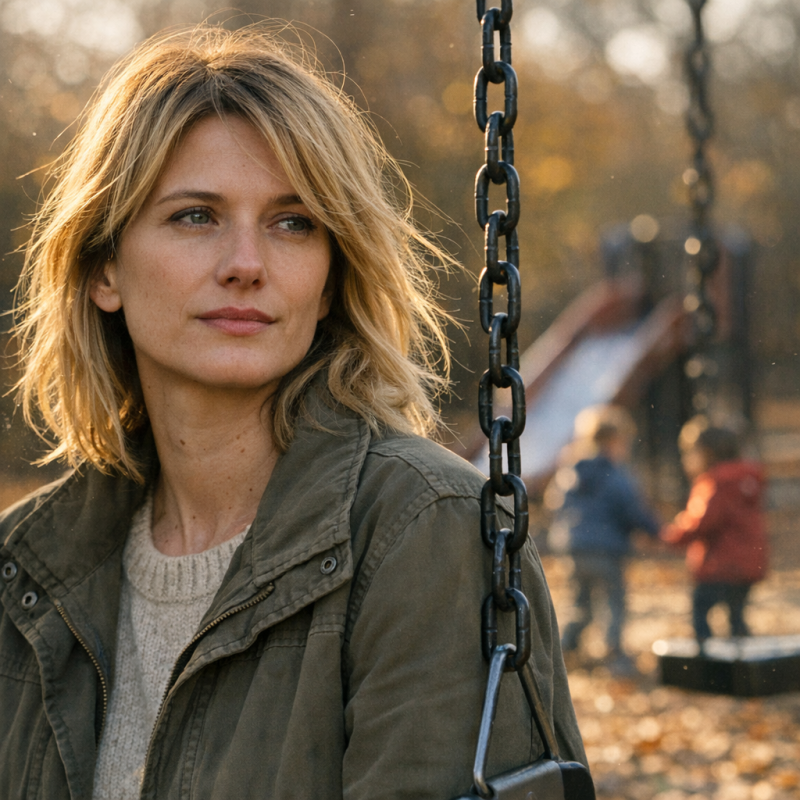 Image by FCT AI
Meeting the Social Worker
The social worker arrived on a Tuesday morning with a clipboard and a kind smile. Her name was Karen, and she had this warm, grandmotherly energy that immediately put me at ease—or tried to, anyway. I was a nervous wreck. I'd spent the previous three days deep-cleaning every corner of my house, buying child-safety locks, rearranging the guest rooms into actual kids' bedrooms with new sheets and stuffed animals. Karen walked through slowly, asking questions about my work schedule, my support system, my experience with children. I answered honestly, my voice shaking a little. She sat down at my kitchen table and made notes while I tried not to fidget. 'You've clearly put a lot of thought into this,' she said, glancing around at the art supplies I'd stacked on the counter, the growth chart I'd hung on the wall. 'These children are very lucky to have you.' I felt this rush of validation, like I'd passed some test I hadn't realized I was taking. She approved my home right there, signed off on the paperwork with warm encouragement. I thought she meant lucky to be loved, not lucky to be conveniently placed.
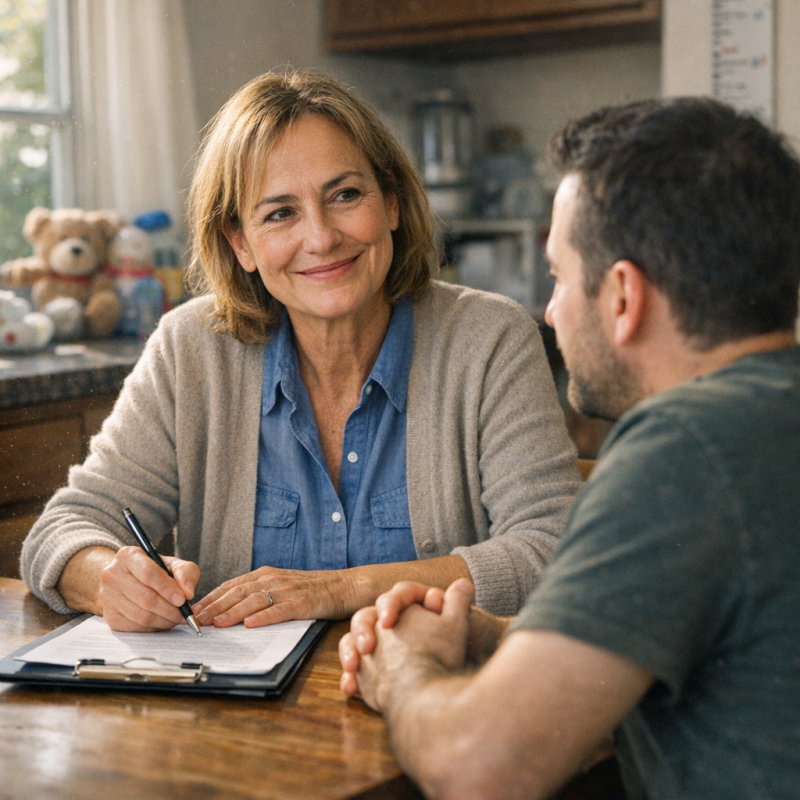 Image by FCT AI
The Hospitalization
Rachel texted me late on a Thursday night: 'In hospital. Final admission. Don't come—too tired for visitors.' I stared at my phone, my stomach dropping. This was it. The moment we'd all been dreading. I tried calling her, but she didn't answer. She just sent another text: 'They're making me comfortable. I'll keep you updated.' The next morning I couldn't stand it anymore. I drove to the hospital, parked in the garage, and practically ran to the oncology ward. But when I got to the nurses' station and asked for Rachel's room, the nurse looked confused. She checked her computer, clicked around, then checked again. 'I don't see anyone by that name admitted,' she said. 'Are you sure she's here?' My mind went blank. I stammered something about maybe a different floor, a different wing. The nurse called around while I stood there feeling like the ground was tilting. No Rachel anywhere in the system. I drove home in a daze, telling myself it had to be some administrative error—maybe she'd registered under a maiden name, maybe the system was slow to update. When Rachel texted that she'd been admitted, I rushed to the hospital—but the nurse at the desk had no record of her ever being there.
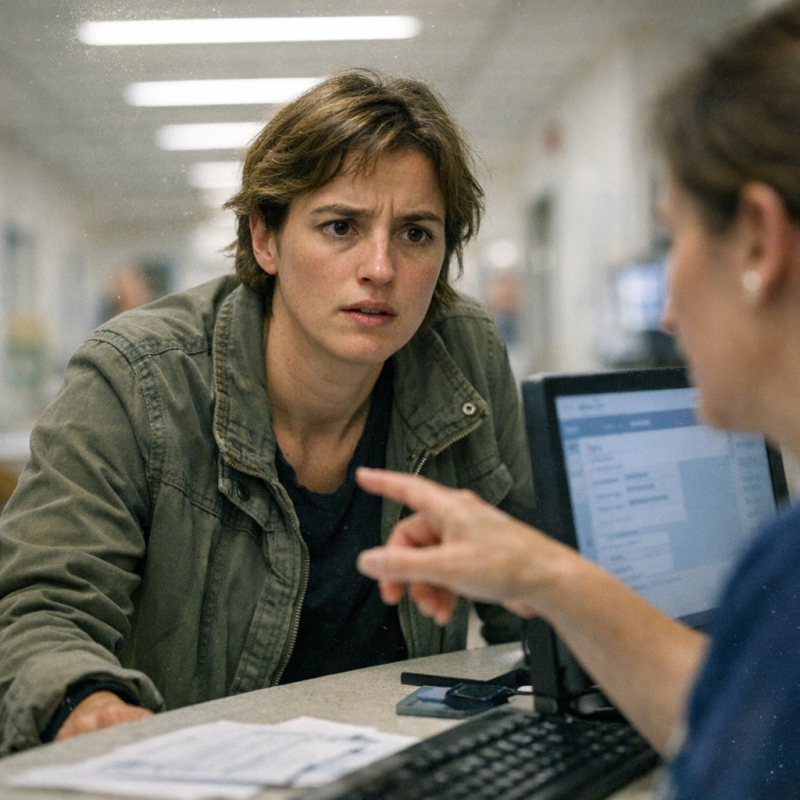 Image by FCT AI
The Call in the Night
The call came at 2:47 in the morning. I know because I stared at the clock on my nightstand while the phone rang, my heart already pounding before I even answered. A woman's voice, professional and gentle: 'Is this Jenna? I'm calling about Rachel.' My mouth went dry. 'She passed away about an hour ago. She wanted you to be notified immediately.' The words didn't make sense at first. They were just sounds. Then they hit me all at once, like a wave that knocked me completely underwater. I heard myself make this awful noise, something between a gasp and a sob. The woman kept talking—something about arrangements, something about the children, something about paperwork—but I couldn't process any of it. I slid down the wall in my hallway and sat on the floor in the dark, the phone still pressed to my ear. Rachel was gone. My best friend was gone. The kids' mother was gone. I sat there until the sun came up, crying so hard I thought I might break apart completely. The voice on the phone said Rachel was gone, and I collapsed against the wall—I had no idea I was grieving someone who was very much alive.
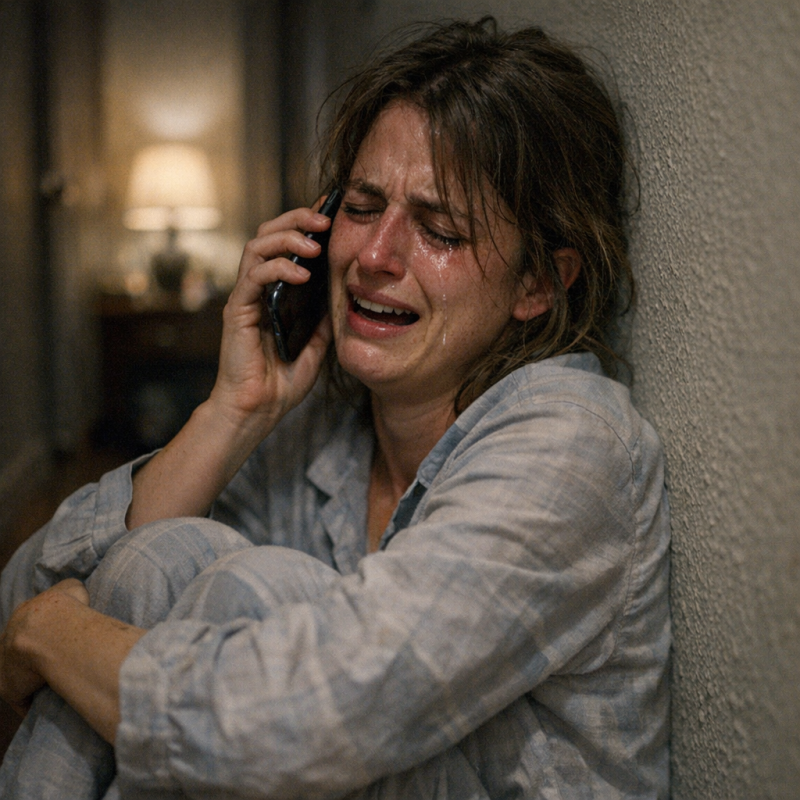 Image by FCT AI
Telling the Children
I had to tell them. That was the worst part—knowing I had to look at Mason and Ellie and say the words that would destroy their world. I picked them up from Karen's temporary placement that morning. They were so excited to see me, running to the car with their backpacks. I drove them to my house, my hands shaking on the steering wheel. We sat on the couch together, and I pulled them close. 'I have something very sad to tell you,' I started, and Mason's face changed immediately—he knew. 'Your mom died last night. She's gone.' Mason screamed. Just screamed, this raw animal sound, and then he was sobbing, hitting the couch cushions with his fists. Ellie didn't make any sound at all. She just went completely still, her eyes wide and blank, like she'd disappeared inside herself. I held them both while they fell apart. Mason cried for what felt like hours. Ellie just sat there, silent and frozen. I kept saying, 'I'm here, I've got you, I'm not going anywhere,' over and over like a promise. Mason screamed and Ellie went silent, and I held them both while they shattered—children grieving a mother who had abandoned them on purpose.
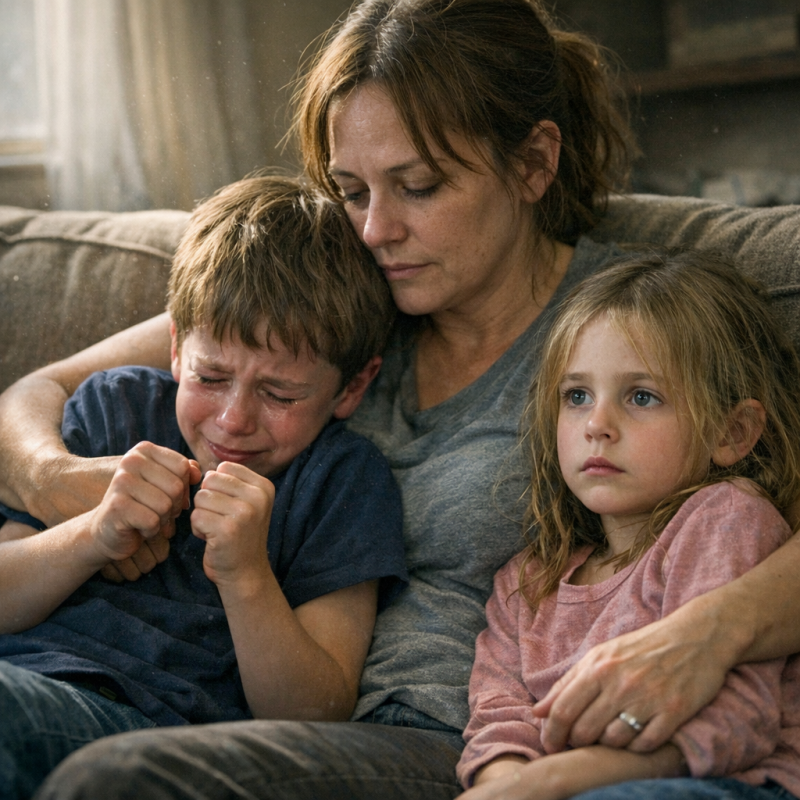 Image by FCT AI
The Closed Casket Funeral
The funeral was small. Rachel didn't have much family—just a distant cousin who flew in from Nevada and left right after. A few people from her old job showed up, looking uncomfortable. The funeral home had arranged everything, apparently all prepaid by Rachel months earlier. The casket was closed. 'Per the deceased's wishes,' the funeral director explained, and I didn't question it. Some part of me was relieved, honestly—I didn't want Mason and Ellie to have that final image burned into their memories. We sat in the front row, me in the middle with a kid on each side. Mason kept his head down the entire time. Ellie held my hand so tightly my fingers went numb. A minister who'd never met Rachel said generic things about eternal peace. Someone played 'Amazing Grace' on a piano. The whole thing felt surreal, like I was watching it happen to someone else. I kept thinking Rachel should be there, that she'd walk through the door any second and tell us this was all a terrible mistake. But she didn't. We left the cemetery in silence, and I kept looking back at that closed casket. I stood at Rachel's funeral holding Ellie's hand, staring at a casket that held nothing but props and lies.
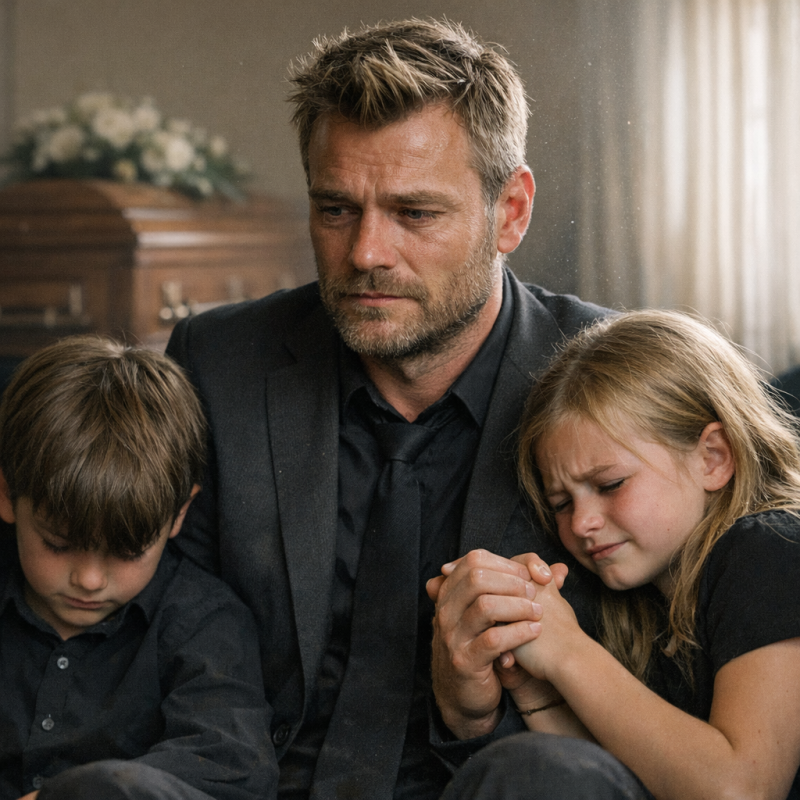 Image by FCT AI
Moving Day
Moving day happened on a grey Saturday morning. Karen helped me load boxes from Rachel's apartment into my car—clothes, toys, books, all the pieces of two small lives packed into cardboard. The landlord had already started emptying the place out. It felt wrong, too fast, like we were erasing Rachel before she'd even been gone two weeks. Mason insisted on carrying his own box, this heavy thing full of Lego sets, refusing my help. Ellie clutched a stuffed rabbit the entire time, wouldn't let go of it even to put on her seatbelt. At my house—their house now, I guess—I'd prepared their rooms as best I could. Mason's had blue walls and a desk by the window. Ellie's had fairy lights and a bookshelf I'd filled with stories. We unpacked slowly. Mason set up his Legos with intense focus, not speaking. Ellie arranged her stuffed animals on the bed in a specific order, adjusting them over and over. I kept thinking, 'This is it. We're a family now.' It felt both beautiful and heartbreaking. As I unpacked their boxes in rooms I'd prepared with love, I had no idea I was completing the final stage of someone else's plan.
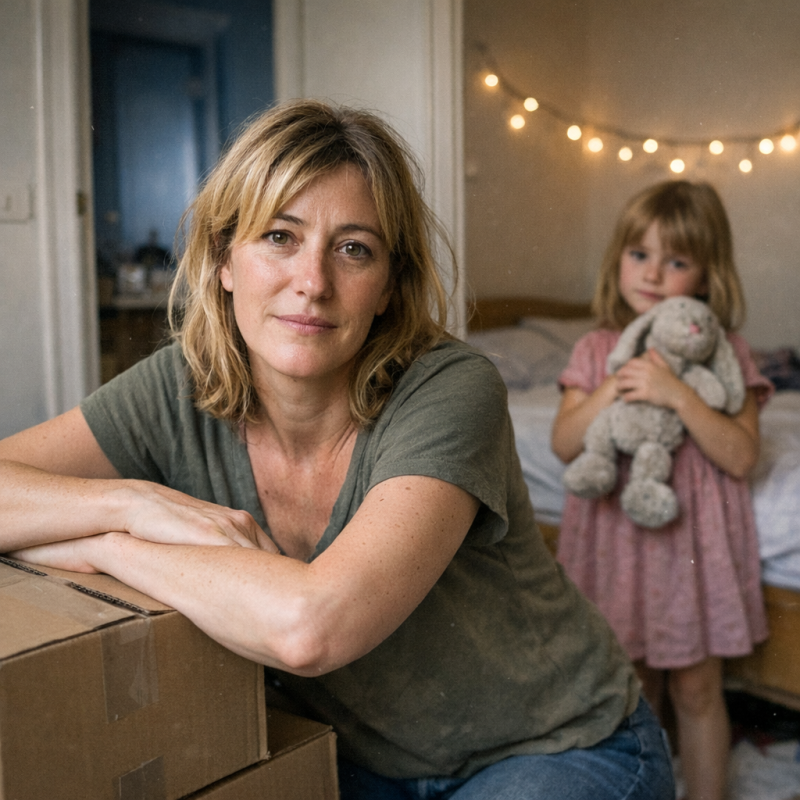 Image by FCT AI
Learning to Be Mom
Being a mom was nothing like I'd imagined. I knew it would be hard, but I wasn't prepared for how completely it would consume me. The morning routines, the lunchboxes, the homework battles. Mason had nightmares almost every night and would wake up screaming. Ellie stopped talking for almost a week straight, just pointed at things when she needed something. I took time off work, then went part-time. We went to a grief counselor who had toys in her office and spoke in a gentle voice that made me want to cry. Slowly, we found our rhythm. Mason started smiling again, little moments here and there. Ellie began drawing pictures, dozens of them—all of the three of us together. We'd have dance parties in the kitchen while making dinner. We'd read stories at bedtime, all piled together on Ellie's bed. One Tuesday evening, Ellie reached for me when she was tired and said, 'Mommy, can you—' and then stopped, her eyes going huge with horror. She burst into tears. I held her while she sobbed, 'I'm sorry, I'm sorry.' 'It's okay,' I whispered. 'It's okay, sweetheart.' Ellie called me 'Mommy' by accident and then burst into tears, and I realized we were all mourning and healing in the same broken home.
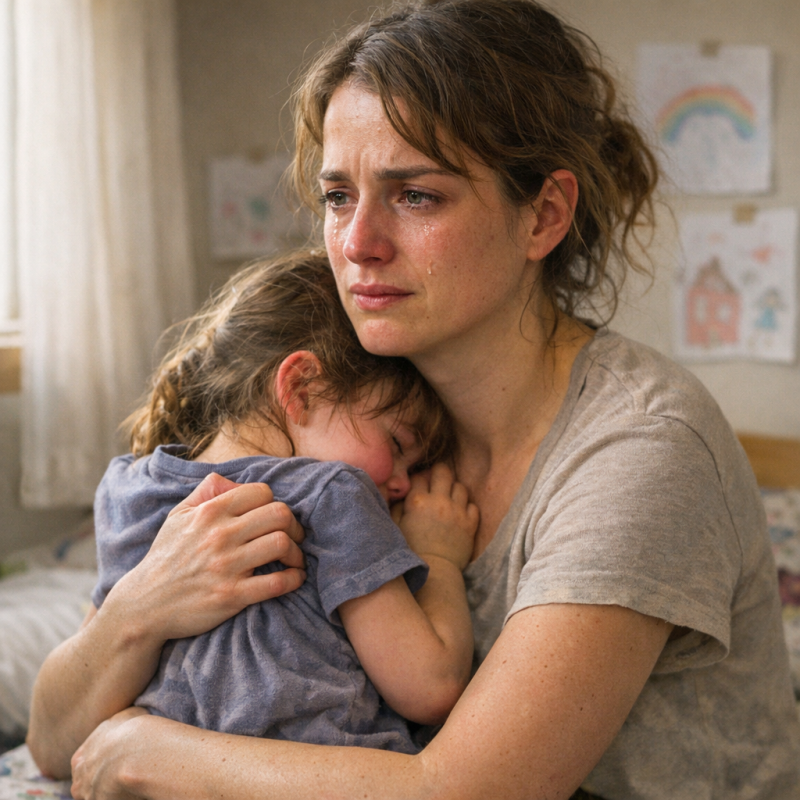 Image by FCT AI
The First Strange Sign
I hadn't looked at Rachel's Facebook page in weeks. Couldn't bring myself to. But one night after the kids were asleep, I was scrolling mindlessly through my phone and saw a notification: 'Rachel has accepted your friend request.' Weird. I clicked on it. Then I saw more notifications—activity on her page from yesterday. New friend requests accepted. I felt this cold, creeping sensation up my spine. I clicked through to her profile. There it was: three new friends added in the last two days. I checked the date. Three weeks after her funeral. My hands started shaking. This wasn't possible. Someone must have access to her account. Maybe her cousin? Maybe some automatic thing? I tried to remember if Rachel had mentioned anything about that, if maybe she'd set up some kind of scheduled posts or something. People did that, right? Set up their accounts to keep updating after they were gone? I closed the app, my heart pounding. It was nothing. It had to be nothing. Grief does strange things to you, makes you see patterns that aren't there. I stared at the notification showing Rachel had accepted a friend request yesterday, and my hands started shaking—grief does strange things, I told myself.
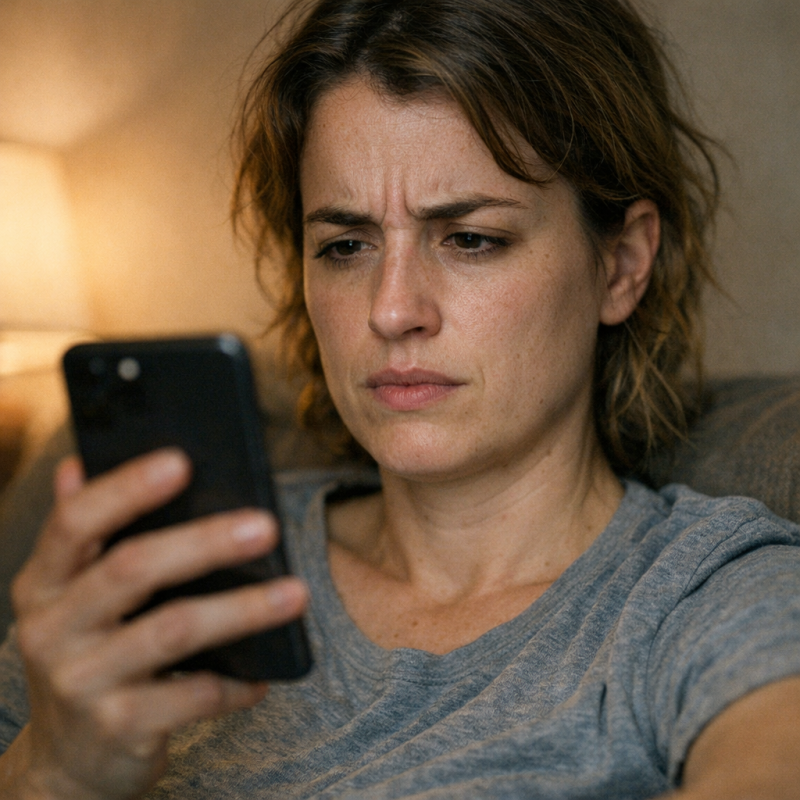 Image by FCT AI
Mason's Behavior Changes
The call came during my lunch break. Mason had gotten into a fight—punched another kid in the cafeteria. I left work immediately, my mind spinning. Mason didn't hit people. He was gentle, thoughtful, the kind of kid who cried when we had to relocate a spider. When I got to the principal's office, he sat slumped in the chair, his knuckles red. The other kid was fine, just shocked. I signed the necessary forms, apologized profusely, and walked Mason to the car in silence. He didn't speak until we were halfway home. Then he turned to me, and I swear it was like looking at Rachel—the exact same expression she'd get when she was about to say something that would change everything. 'Jenna,' he said quietly, his voice flat and too old for nine years old. 'Why did my mom really leave?' I gripped the steering wheel harder. 'Mason, sweetheart, your mom didn't leave. She died. She was sick, remember?' He stared at me with those eyes—Rachel's eyes—searching my face for something I couldn't name. The school called to say Mason had punched another kid, and when I picked him up, he looked at me with Rachel's eyes and asked why his mom really left.
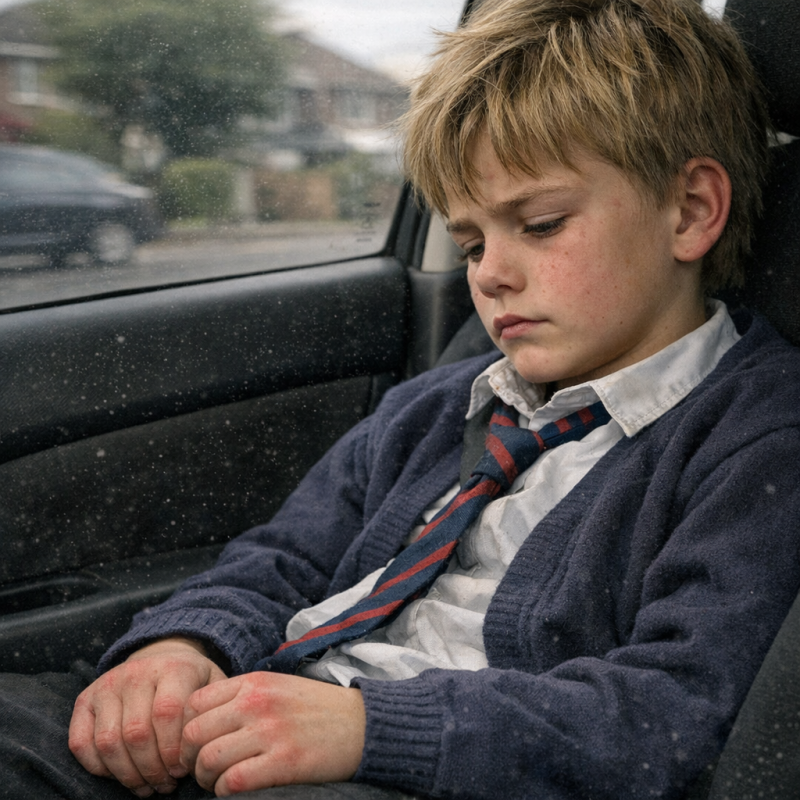 Image by FCT AI
The Shared Post
I couldn't sleep that night. Mason's question kept circling my mind, mixing with everything else that didn't make sense. Around two in the morning, I picked up my phone to check on nothing in particular—that stupid habit we all have. My Facebook app showed a notification. Rachel had shared a post. I sat up so fast I felt dizzy. It was a song, 'Blue October - Hate Me,' one she used to play on repeat during her divorce. The kind of song that meant something specific to her. I clicked on it, my hands trembling. The share was public. Posted to her timeline. I checked the timestamp. 2:13 AM. This morning. Today. Now. I opened Google in a panic, searching 'can memorialized Facebook accounts post.' The answer was clear: No. Memorialized accounts are frozen. No new posts. No shares. No activity. Friends and family can write on the timeline, but the account itself can't do anything. I read it three times, my heart hammering. This wasn't someone with access to her account. This was new activity. Impossible activity. The timestamp on the shared song was 2:13 this morning, and I couldn't breathe—memorialized accounts don't post new content.
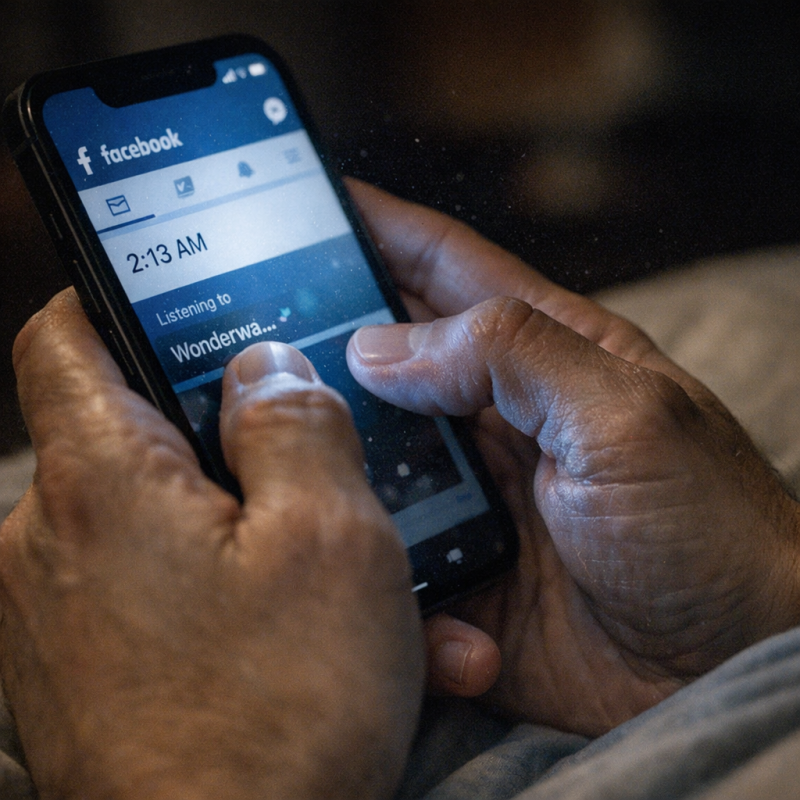 Image by FCT AI
Seeking Normalcy
I decided I needed to be normal. For the kids. They'd been through enough without watching me fall apart over Facebook timestamps and impossible questions. So I made pancakes the next morning—the kind with chocolate chips that Ellie loved. I braided her hair the way Rachel used to, or at least tried to. Mason sat at the table pushing food around his plate, still quiet from yesterday. 'Today's going to be a good day,' I announced with forced brightness. 'After school, we're going to the park. Maybe get ice cream.' Ellie smiled, and that helped. A little. I packed their lunches, checked their backpacks, reminded Mason about his homework. I did all the mom things, the guardian things, the things Rachel should have been doing. And the whole time, that feeling sat in my chest like a stone. Something was wrong. Something was very, very wrong. But I smiled and tied shoes and waved at the bus and pretended. I was getting good at pretending. When they were gone, the house fell silent, and the wrongness rushed back in. I made pancakes and braided Ellie's hair and pretended everything was fine, but the feeling that something was very wrong wouldn't leave me alone.
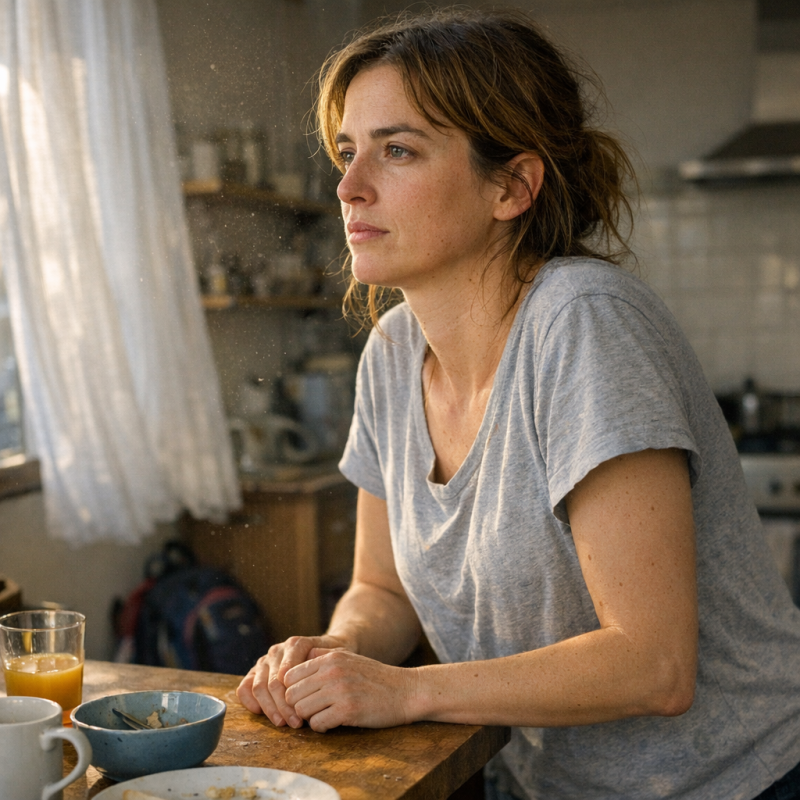 Image by FCT AI
The Phone Call From a Stranger
The phone rang three days later. Unknown number. I almost didn't answer. 'Hello?' A man's voice, friendly and confused. 'Hi, is this the number for Rachel Winters?' My stomach dropped. 'Who is this?' I asked. 'I'm Marcus. Rachel and I have been seeing each other for a few months. She gave me this number about two weeks ago, said I could reach her here if her cell wasn't working. Is she around?' Two weeks ago. Two weeks ago Rachel was dead. Had been dead. Was supposed to be dead. 'I think you have the wrong number,' I managed. 'No, no, I'm sure this is it. Rachel Winters, blonde, works in marketing? We just had dinner last Saturday, and she mentioned—' I hung up. Just pressed the red button and dropped the phone like it had burned me. My whole body was shaking. Last Saturday. Last Saturday I was at Rachel's memorial service, standing at a podium reading a eulogy I'd written through tears. The room tilted sideways. The man said he'd been dating Rachel for months and had just seen her recently—I hung up shaking, the room spinning around me.
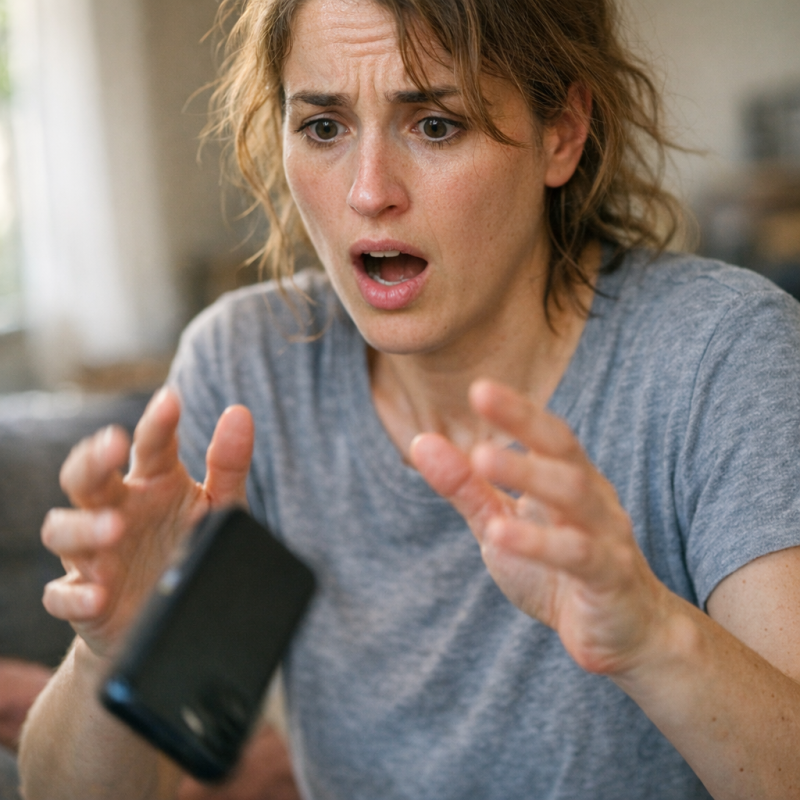 Image by FCT AI
Questioning Reality
I spent that night questioning everything. Was I losing my mind? People didn't just fake their own deaths, did they? But the Facebook activity, the phone call, Mason's strange question—it all added up to something impossible. Or I was having some kind of breakdown. Grief-induced psychosis, maybe. That was a thing, wasn't it? I sat at my laptop at midnight, typing Rachel's name into Google for the hundredth time. Her obituary came up first—the one I'd helped write, fact-checked, approved. Rachel Marie Winters, beloved mother, taken too soon by cancer. There were condolence messages. Photos from the service. Everything that proved she was gone. I clicked through page after page, searching for anything else. Any news stories, any social media I'd missed, any proof of anything. Nothing. Just death announcements and sympathy posts. I closed the laptop and put my head in my hands. Maybe I was going crazy. Maybe grief did this to people, made them see patterns that weren't there, hear voices on phones that couldn't exist. I searched Rachel's name online at midnight, finding nothing but an obituary I'd helped write—maybe I was going crazy, or maybe she was never really gone.
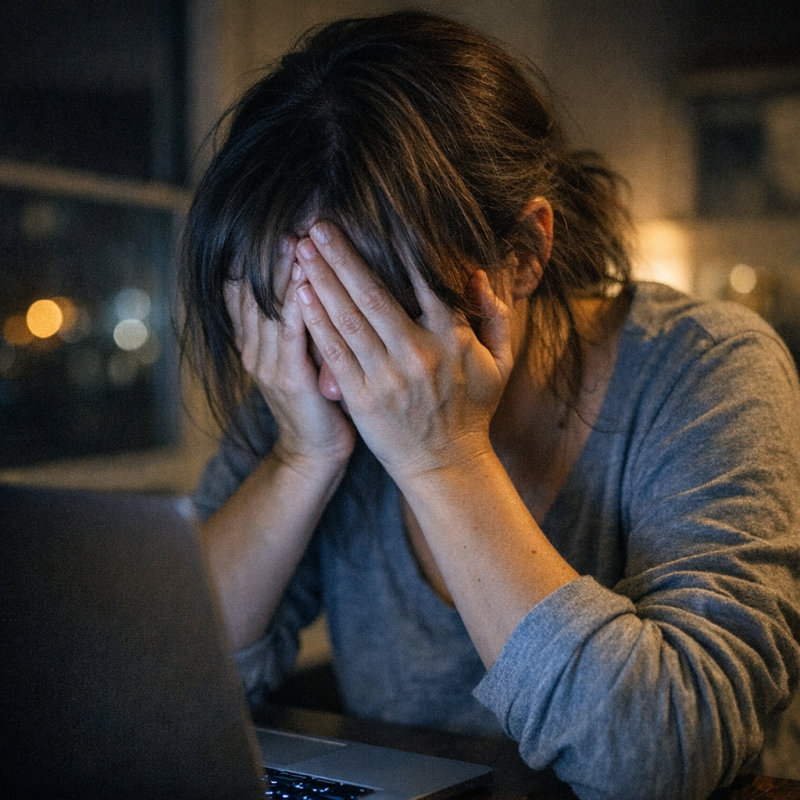 Image by FCT AI
Ellie's Innocent Comment
Ellie was playing with her dolls the next afternoon when she said it. Casual, like commenting on the weather. 'Mommy said I should be good for you.' I was folding laundry and almost didn't catch it. 'What, sweetie?' 'Mommy told me to be good. That you're taking good care of us and I should listen to you.' My hands stilled on the shirt I was holding. 'When did Mommy tell you that?' Ellie looked up, her face innocent. 'Last week.' Last week. 'Ellie, honey, what do you mean last week?' She seemed confused by my tone. 'When she called to say goodnight. She always calls to say goodnight.' The laundry basket slipped from my hands, clothes spilling across the floor. 'She calls you?' 'Sometimes. Not every night. But sometimes.' Ellie went back to her dolls, completely unaware that she'd just shattered my reality into pieces. Rachel called her daughter. After she died. After the funeral. After I'd taken custody and signed papers and buried my best friend. Ellie said Mommy told her to be good for me last week, and when I asked when she meant, she looked confused—'when she called to say goodnight.'
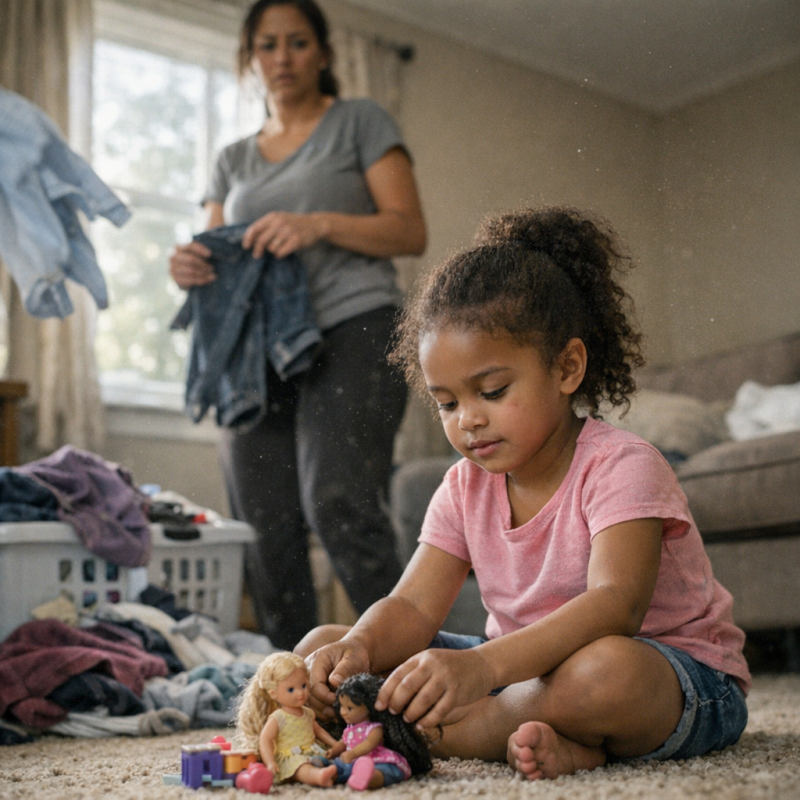 Image by FCT AI
Checking the Records
I needed proof. Real, tangible proof that I wasn't insane. Hospital records would be official, documented, undeniable. Rachel had said she was treated at Mercy General. I drove there the next morning after dropping the kids at school, my hands gripping the steering wheel too tight. The medical records department was in the basement, fluorescent-lit and smelling like antiseptic and old paper. 'I need to request records for Rachel Winters,' I told the administrator, a tired-looking woman with reading glasses on a chain. 'She was a patient here. Cancer treatment.' The woman typed into her computer, frowned, typed more. 'How do you spell the last name?' 'W-I-N-T-E-R-S.' More typing. The frown deepened. 'And when was she treated?' 'This year. January through April.' The woman looked up at me, her expression shifting to something like pity. Confusion mixed with concern. 'Ma'am, I'm searching our entire system. Every department. We have no patient by that name.' 'That's impossible. Check again. Rachel Marie Winters.' She did. Same result. The hospital administrator looked at me with pity and confusion when I demanded Rachel's records—'Ma'am, we have no patient by that name in our system.'
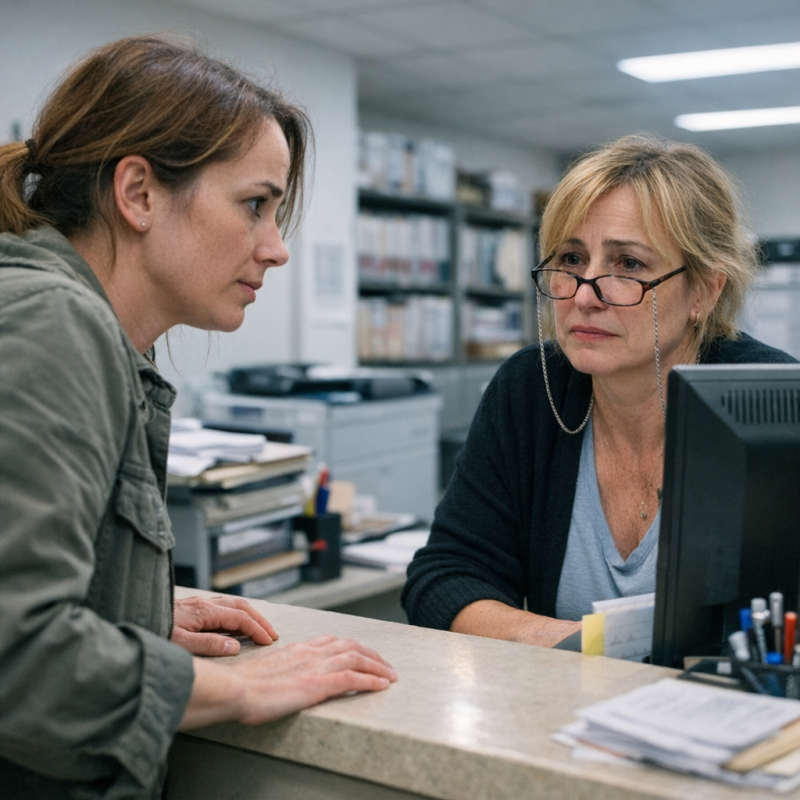 Image by FCT AI
The Oncologist Who Doesn't Exist
I still had paperwork at home—medical documents Rachel had shown me, appointment reminders, treatment schedules. All of it had Dr. Morrison's name at the top. Her oncologist. I started calling. Every oncology practice in the state, working through a list I'd compiled from Google and insurance directories. 'Hi, I'm looking for Dr. Morrison, oncologist.' 'No one by that name here.' Next call. 'Do you have a Dr. Morrison on staff?' 'No, sorry.' Another. And another. I called cancer centers, hospital oncology departments, private practices. Nobody had heard of him. After the twentieth call, my voice was shaking. After the thirtieth, I felt sick. I tried variations—Dr. James Morrison, Dr. J. Morrison, just Morrison in oncology anywhere in the state. Nothing. Zero. He didn't exist in any medical database, any practice, any hospital system. The man whose signature was on Rachel's treatment papers, who'd supposedly delivered her death sentence, who'd written prescriptions and ordered tests—he was nobody. A fabrication. A ghost in a white coat. I called every oncology practice in the state, and not one had ever heard of Dr. Morrison—Rachel's doctor was a ghost.
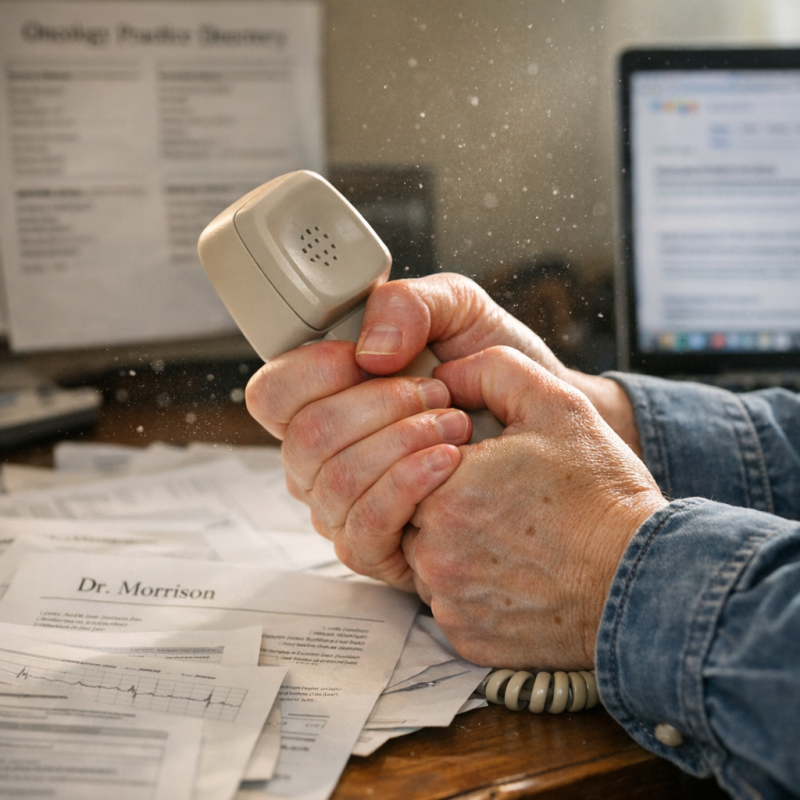 Image by FCT AI
Confiding in Karen
I called Karen two days after my discovery about Dr. Morrison. I couldn't carry this alone anymore. We met at a coffee shop near her office, and I brought everything—the medical documents with the phantom doctor's signature, my notes from calling every oncology practice in the state, the death certificate with its administrative oddities. Karen ordered tea she didn't drink. She just sat there, listening as I laid it all out, watching my hands shake as I pointed to each piece of evidence. 'None of this adds up,' I told her. 'The doctor doesn't exist. The hospital has no record of her admission. But I have kids in my house who think their mother is dead.' Her frown deepened with every word I spoke. She picked up the death certificate, examined it closely, then set it down with deliberate care. The silence between us stretched thin. I waited for her to tell me I was crazy, that grief does strange things to people, that I was seeing conspiracies where there was only administrative confusion. Instead, Karen pulled out her phone and started typing. Then she looked up at me with an expression I'd never seen on her face before. Karen listened to my suspicions with a frown that deepened with every word, then said the phrase that changed everything: 'We need to report this.'
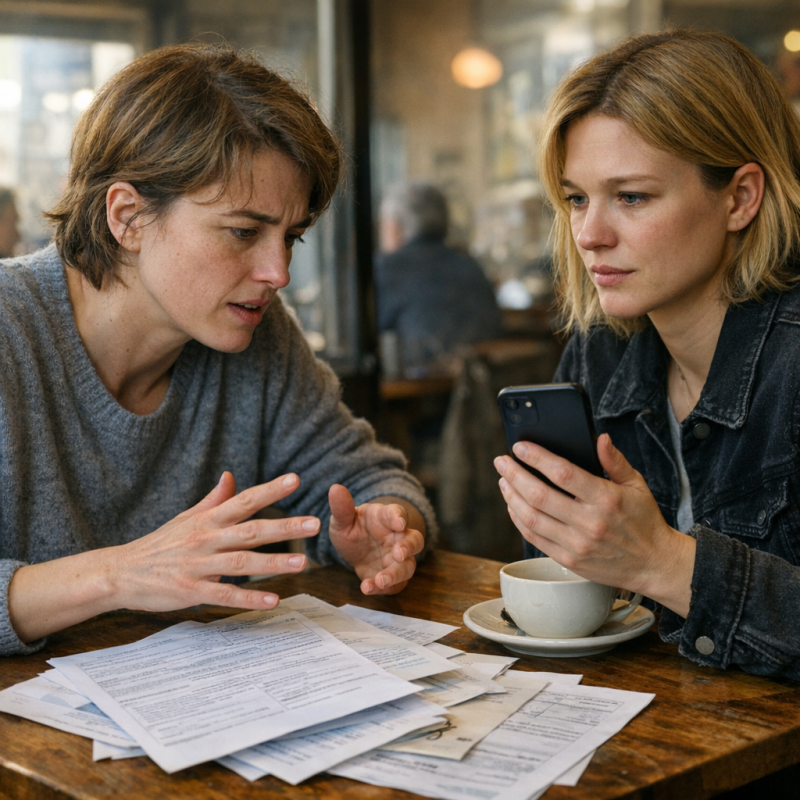 Image by FCT AI
Detective Santos Arrives
Detective Santos arrived at my house three days later. He was shorter than I expected, with tired eyes and a gentle voice that somehow made everything feel more serious, not less. Karen had come with him, sitting beside me on the couch like moral support. Santos took out a notebook, asked me to walk him through everything from the beginning. I told him about Rachel's diagnosis, the rapid decline, the hospice death, the cremation I never witnessed. He didn't interrupt, just wrote in neat, precise handwriting. When I finished, he asked to see the medical documents. I handed them over, watching his face for any reaction. He studied them for several minutes, his pen tapping against his notebook. Then he asked about the death certificate. I'd kept it in a folder with all Rachel's other papers, treating it like the sacred document it was supposed to be. Santos held it up to the light, examined the signature, ran his finger along the embossed seal. His jaw tightened, just slightly, but I caught it. That tiny muscle movement that said volumes. Detective Santos asked to see the death certificate, and the way his jaw tightened as he examined it told me everything I needed to know—this was fraud.
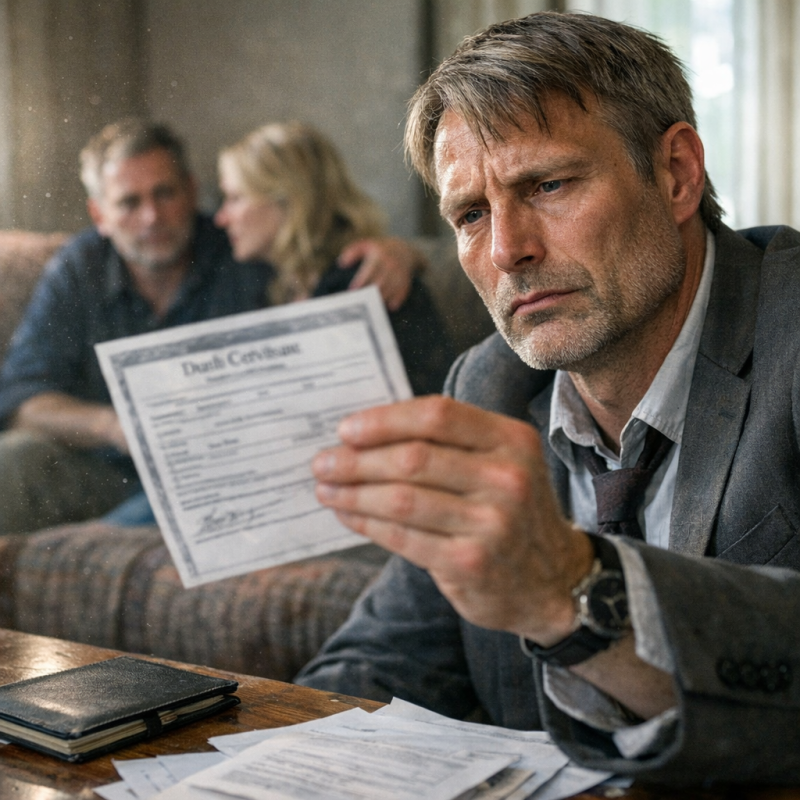 Image by FCT AI
The Locked Metal Box
Santos told me to search Rachel's belongings thoroughly, to document anything unusual. So I started going through her room again, more carefully this time. I'd already sorted most of her clothes into donation boxes, but I hadn't touched the closet completely. The kids were at school. The house was quiet except for the sound of hangers scraping against the rod. I moved winter coats aside, sweaters Rachel had worn when we'd take the kids to the park. That's when I felt it—something solid behind the hanging clothes, pushed far back into the corner. A metal box, maybe the size of a shoebox but heavier. Much heavier. It was wedged between the wall and the closet floor, deliberately hidden. The lock was simple but sturdy, the kind that required a key I didn't have. I pulled it out into the light, surprised by its weight. Dust covered the top, suggesting it had been there a while, untouched. I tried the lock, obviously, but it didn't budge. I sat there on Rachel's bedroom floor, this mysterious box in my lap, wondering what my supposedly dying best friend had needed to hide. The box was heavy and locked, hidden behind winter coats Rachel would never need again—when I finally pried it open, I found a life I never knew existed.
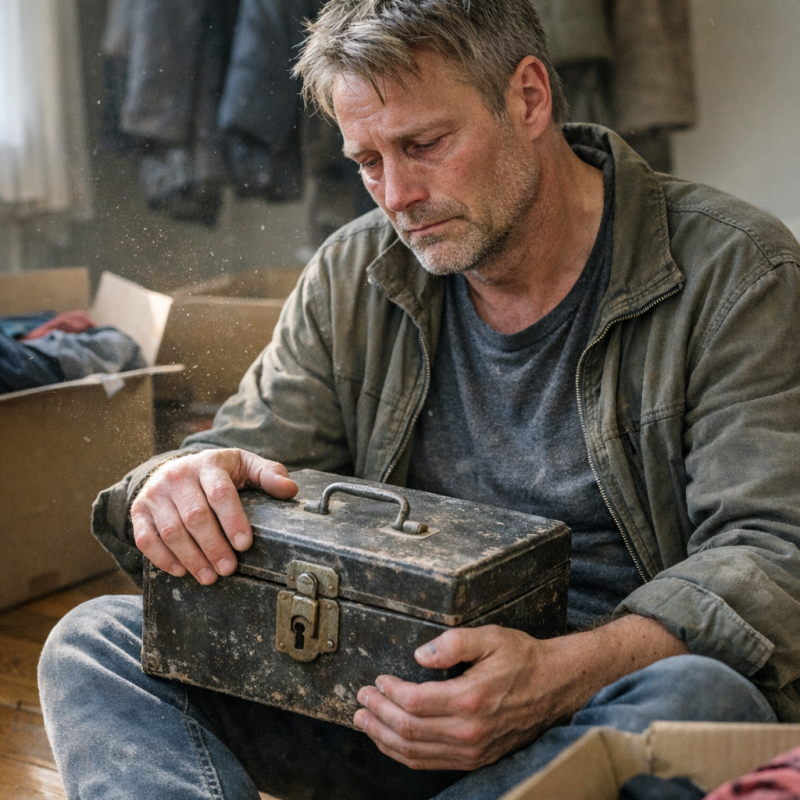 Image by FCT AI
Birth Certificates and Cash
I used a screwdriver from the garage. It took me twenty minutes of prying and twisting, and I probably destroyed the lock mechanism completely, but I got it open. The lid popped up with a metallic snap. Inside, everything was organized with disturbing precision. Cash, first—bundles of hundred-dollar bills wrapped in rubber bands, maybe fifteen thousand dollars total. Beneath that, a manila envelope containing IDs. Driver's licenses from different states, all with Rachel's photo but different names. Sarah Mitchell. Jennifer Lawson. Catherine Reed. The licenses looked real, professional, not some amateur Photoshop job. And then the birth certificates. Multiple birth certificates for Ellie and Max, each with different fathers listed, different registration dates, different middle names. Like she'd been preparing alternate identities for her own children. There was a passport too, Rachel's face but another name I didn't recognize. Everything suggested planning, preparation, intention. This wasn't confusion or administrative error. This was someone building an escape route. The cash was bundled in neat stacks, the IDs showed Rachel's face with different names, and the birth certificates revealed secrets I wasn't ready to face.
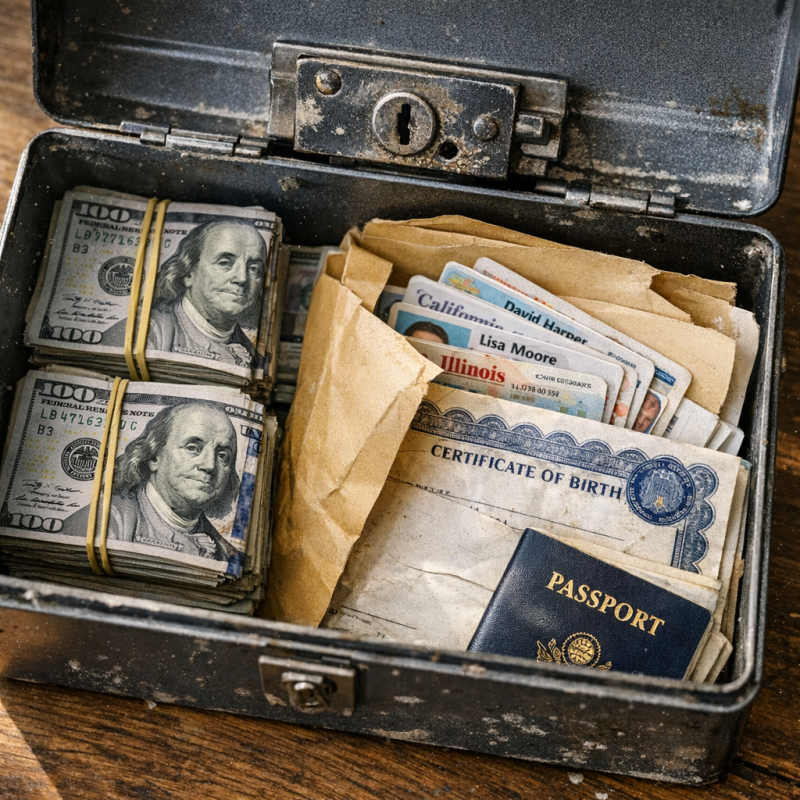 Image by FCT AI
Photographs of Rachel and David
At the bottom of the box, underneath everything else, I found photographs. Not many, maybe a dozen, but each one felt like a betrayal. Rachel and a man on a beach somewhere tropical. Rachel and the same man at a restaurant, wine glasses raised. Rachel and this man in what looked like a hotel room, intimate and casual. It took me three photos to recognize him. David. My ex-husband. Rachel and David, together, looking at each other the way I'd once hoped someone would look at me. I checked the backs of the photos for dates. Some had timestamps printed in the corner from whatever camera or phone had taken them. My hands started shaking when I saw the dates. Three years into my marriage. Four years. Five years. Photos spanning the entire duration of my relationship with David, my entire friendship with Rachel. They'd been together the whole time. While I was making dinner for my husband, she was meeting him somewhere. While I was confiding in my best friend about our marriage problems, she was the problem. The photo showed Rachel and David on a beach, his arm around her waist, her head on his shoulder—the timestamp was from three years into my marriage.
 Image by FCT AI
Confronting David
I texted David to meet me at the coffee shop where we'd signed our divorce papers. Felt fitting. He showed up looking concerned, probably thought it was about custody or finances. I didn't say hello. I just slid the photographs across the table, watching his face. The color drained from him immediately. He picked up the beach photo, the restaurant photo, set them down like they burned. 'Jenna—' he started. 'Don't,' I said. 'Don't lie to me anymore. I need the truth. All of it.' He stared at his hands for what felt like an hour. Other customers chatted around us, oblivious. Finally, David looked up, and I saw something in his eyes I'd never seen before—shame, maybe, or resignation. 'It started before you and I got serious,' he said quietly. 'It never really ended.' I wanted to throw my coffee in his face. I wanted to scream. Instead, I just sat there, frozen. 'Rachel?' I asked. He nodded. 'The whole time?' Another nod. The silence stretched between us until I couldn't stand it anymore. 'Is there anything else I should know?' David went pale when I slid the photos across the table, and after a long silence, he whispered the three words that shattered me: 'Ellie is mine.'
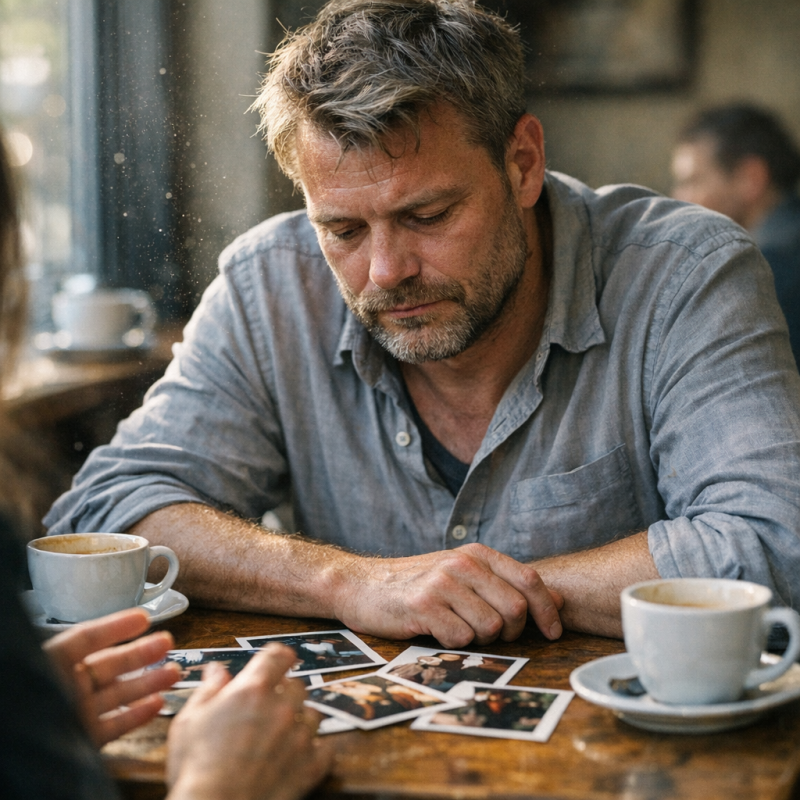 Image by FCT AI
The Affair's Timeline
I couldn't speak for a full minute. Ellie. Sweet, quiet Ellie with her dark curls and serious eyes. David's daughter. My best friend's daughter. Their daughter together. 'Explain,' I finally managed. So he did. The affair started six months before David and I began dating. He'd met Rachel at some work conference, they'd had a weekend together, kept in touch. When he and I got serious, he tried to end it, but Rachel was pregnant. Ellie was born, and they agreed to keep it secret. Rachel would raise her alone, David would provide financial support quietly. But they couldn't stay away from each other. The affair continued through our entire marriage. Every business trip, every late night at the office, every time I'd trusted him—he'd been with her. 'She was my friend,' I said, hearing how broken my voice sounded. 'I introduced you two at that barbecue. I thought I was introducing you for the first time.' David's laugh was bitter. 'Yeah. We were pretty good actors that day.' My whole life had been a performance I hadn't known I was in. David admitted the affair started before I even knew Rachel existed—our entire friendship had been built on a foundation of his lies and her patience.
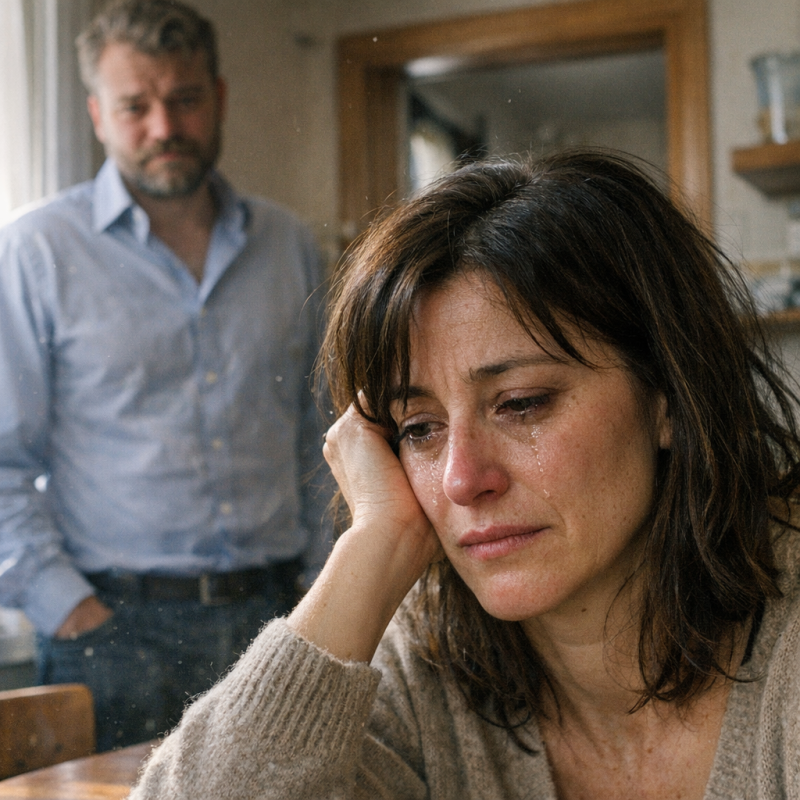 Image by FCT AI
David's Limited Knowledge
I had a thousand more questions, but one rose above all the others. 'Where is she?' I asked. 'Where's Rachel now?' David's expression shifted to something like confusion. 'I don't know.' I slammed my hand on the table, making our cups rattle. 'Don't. I'm done with lies.' 'I'm not lying,' he insisted. 'She cut contact with me months ago. Around the same time she told you about the cancer. I thought—' He stopped, looked away. 'You thought what?' 'I thought she was actually dying. She stopped answering my calls, my texts. I tried to visit once, and you answered the door. She'd shut me out completely.' I studied his face for any sign of deception, but he looked as lost as I felt. 'She left her kids with me and disappeared,' I said. 'You're telling me you have no idea where she went or why?' David shook his head. 'I've been trying to figure it out too. This wasn't the plan. We never talked about her just vanishing.' The mystery was deepening instead of resolving. When I demanded to know where Rachel was, David looked as lost as I felt—'She cut contact months ago. I thought she was actually dying.'
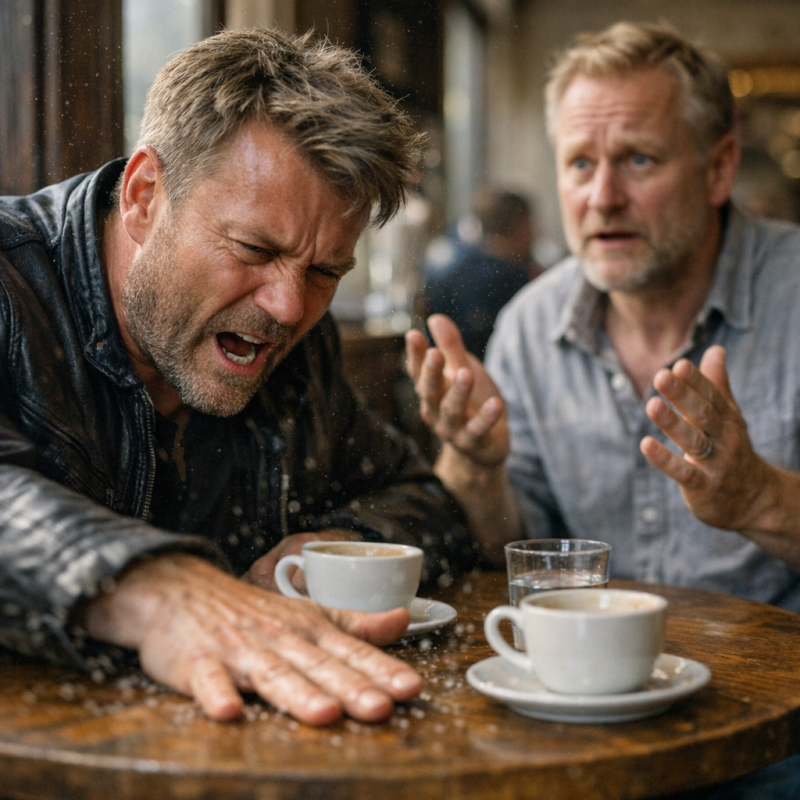 Image by FCT AI
Protecting the Children From Truth
Mason asked me three times that morning why I looked so sad. I kept brushing it off, ruffling his hair, saying I was just tired. Ellie watched me from the couch with those huge eyes that looked exactly like Rachel's, and I felt like the worst person alive. I'd promised myself I'd always be honest with them. That was the whole point, right? Being better than what they'd lost. But how do you tell a nine-year-old and a six-year-old that their mother might be alive somewhere? That she might have chosen to leave them behind? Mason was already struggling with nightmares. Ellie barely spoke some days. The truth would destroy whatever fragile stability we'd built. But lying to them made me feel like I was becoming Rachel—someone who twisted reality to protect herself. I watched Mason pour cereal for his sister, being the little parent he'd learned to be, and my heart broke all over again. 'You sure you're okay?' he asked, pausing at the kitchen doorway. I forced a smile. 'I'm sure, buddy.' How could I tell him his mother might be alive but chose to leave him behind?
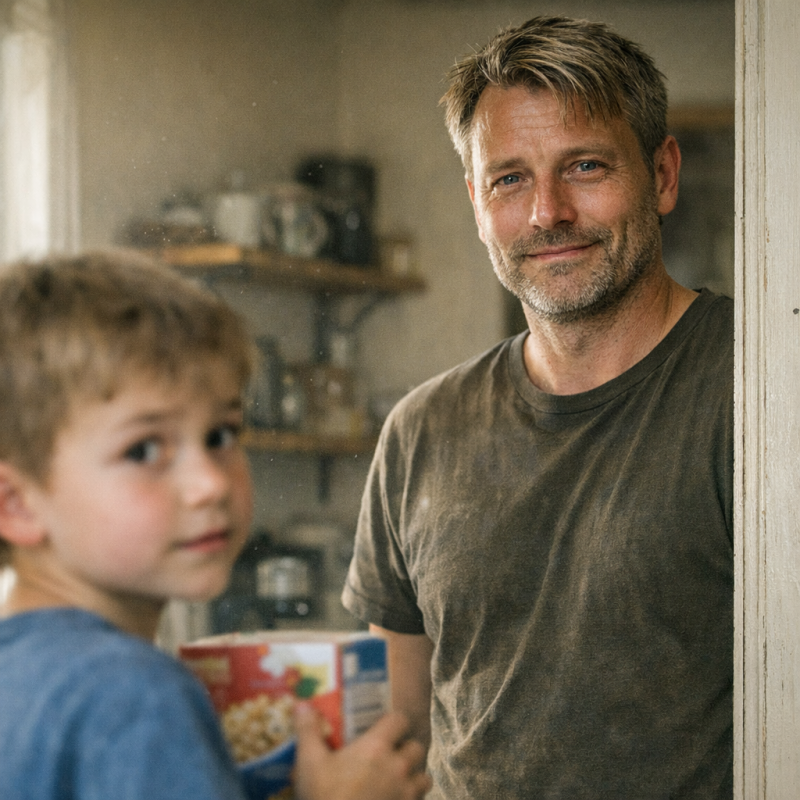 Image by FCT AI
Detective Santos's Theory
Detective Santos came by that afternoon and spread documents across my kitchen table like puzzle pieces. 'I need you to look at these dates,' he said, tapping the first page. The fake medical records were created six months before Rachel's supposed diagnosis. The guardianship paperwork she'd pushed me to sign was rushed through two months later. She'd prepaid her funeral arrangements three months before her 'death.' Santos traced the timeline with his finger, and I felt something cold settle in my stomach. 'This level of planning,' he said quietly, 'doesn't happen in response to a diagnosis. This is premeditated.' I stared at the papers, my hands shaking. The Rachel I thought I knew would never have done this. But maybe I'd never known her at all. Every document told the same story: careful preparation, meticulous timing, deliberate choices. 'People don't accidentally fake their own death,' Santos continued. 'They plan it. Sometimes for years.' I looked at the timeline again, at all those dates that preceded her tears in my living room, her trembling voice telling me she was dying. Santos laid out the timeline on the table—fake documents acquired six months before diagnosis, guardianship paperwork rushed, funeral paid in advance—and I started to suspect this was all planned from the beginning.
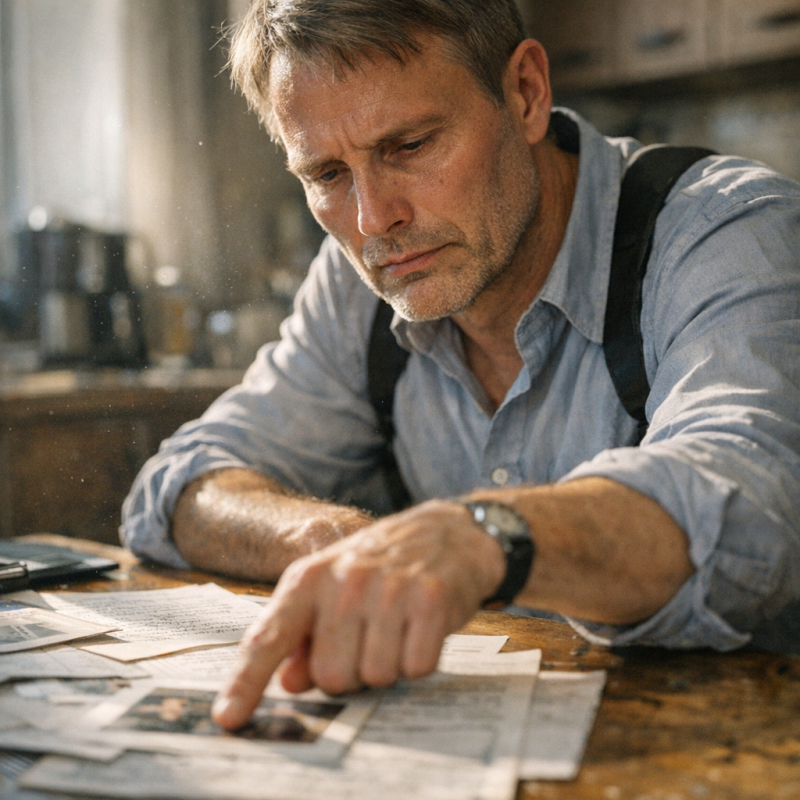 Image by FCT AI
The Financial Trail
The next day, Santos called with more. Rachel had systematically liquidated everything. Her savings accounts, closed three months before her supposed death. Investment portfolios, cashed out two months later. She'd even sold her car—the one I'd assumed was still sitting in some storage unit somewhere. 'Where did all the money go?' I asked, already knowing the answer wouldn't make sense. 'Offshore accounts,' Santos said. 'The last major transfer was three weeks before the funeral. Almost two hundred thousand dollars, moved through three different banks.' I sat down hard on my couch. Two hundred thousand dollars. Money that should have gone to Mason and Ellie's college funds, their futures. Instead, Rachel had converted their security into her freedom. Every asset stripped and moved, every tie cut cleanly. It wasn't the desperate act of someone dying. It was the calculated dismantling of a life by someone planning to start a new one. I thought about all those afternoons she'd canceled on me, the appointments she'd said were with doctors. Had she been visiting banks instead? Rachel had liquidated everything—savings, investments, her car—transferring it all offshore three weeks before she supposedly died, and I began to see the shape of her escape.
 Image by FCT AI
The Passport Application
Santos showed up at my door that evening with a manila folder he held like it contained something dangerous. Inside was a passport application, submitted four months before Rachel's alleged diagnosis. The photo showed a woman who looked like Rachel but also didn't—darker hair, glasses with thick frames, a harder expression. The name on the application was Christine Morrison. 'We tracked it through facial recognition,' Santos explained. 'She was building a new identity while still living her old life.' I studied the photo, trying to reconcile it with the woman who'd cried in my arms about leaving her children orphaned. She'd literally been constructing a new person, someone without kids or cancer or best friends who believed her lies. 'The application was approved,' Santos said. 'She has a valid passport under this name.' While I was researching treatment options and making meal plans for her chemo days, Rachel had been at photo booths and government offices, creating her exit strategy. The level of compartmentalization it required made me feel sick. She'd looked me in the eye and told me she was dying while carrying documents that proved she was planning to live. The passport photo showed Rachel with darker hair and glasses, under a name I'd never heard—she'd been building her exit strategy while I held her hand through fake treatments.
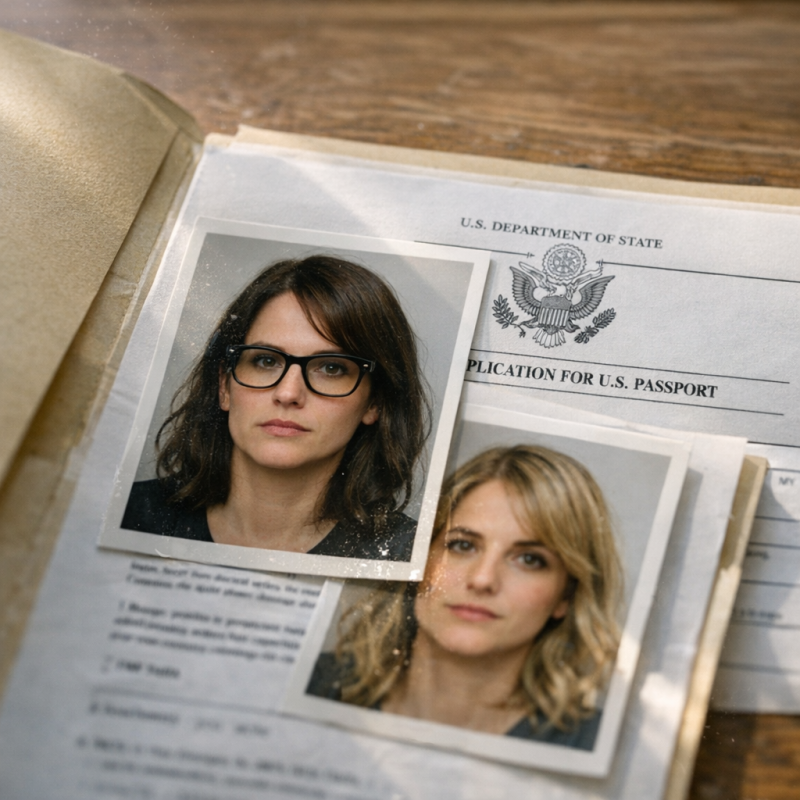 Image by FCT AI
Why Me?
After Santos left, I stood in front of my bathroom mirror for a long time. Why me? The question had been circling for days, but now it landed with full force. Rachel had other friends, closer family, yet she'd chosen me specifically to raise her children. Was it because I had money? My consulting business was successful, sure. I could provide stability. But that felt too simple. Maybe it was my infertility. Rachel knew about the miscarriages, the failed IVF rounds, the desperate ache I carried. Had she seen my vulnerability and thought: perfect? Someone so hungry for children she won't ask too many questions. Someone who'll be grateful instead of suspicious. Or maybe I was just convenient. Close enough to manipulate but not close enough to really know her. Trusting enough to believe a cancer diagnosis without demanding to see actual medical proof. God, had I been that naive? I looked at my reflection and barely recognized myself. The woman staring back had been so desperate to believe in something—friendship, purpose, maybe even motherhood—that she'd swallowed every lie. I stared at my reflection wondering why Rachel picked me—was it my stability, my money, my desperation for children, or just that I was convenient and trusting enough to believe anything?
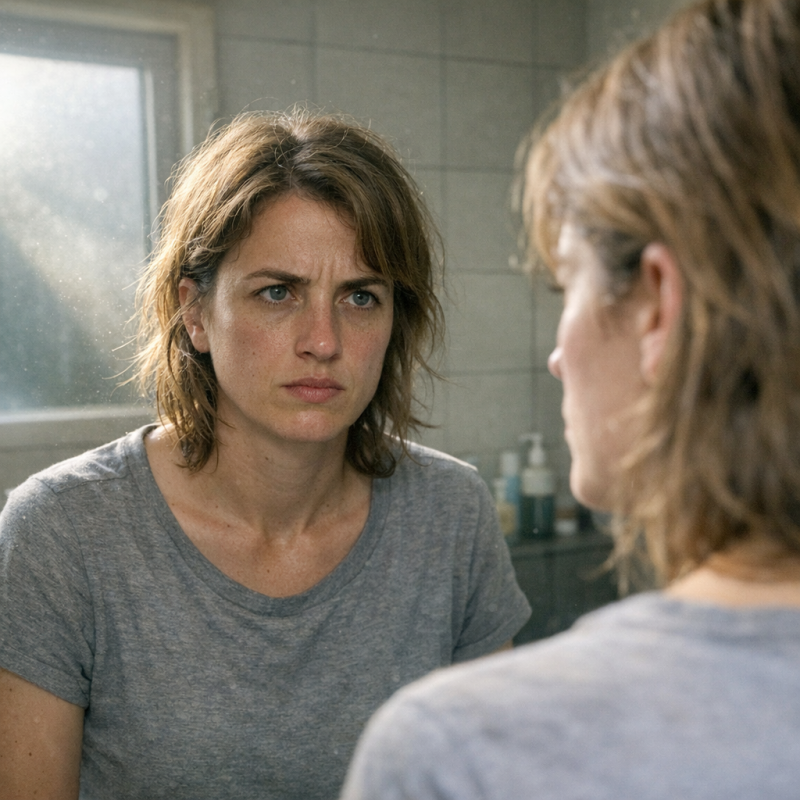 Image by FCT AI
Connection to Financial Fraud
Santos called the next morning, and I could hear the tension in his voice before he even spoke. 'We found something. The man Christine Morrison—Rachel—has been in contact with. His name is Marcus Brennan, and he's wanted for embezzlement in three countries.' My coffee went cold in my hand as he continued. 'He's been moving money through shell corporations for years. Millions of dollars. And Rachel's financial activity suggests she was helping him.' I felt like I was falling. This wasn't just about a woman faking her death to start over. Rachel had been involved in actual crimes. International fraud. Stolen money that had probably ruined lives. 'How long?' I managed to ask. 'We're not sure yet. But the offshore accounts she used? They're connected to Brennan's network. She wasn't just running away with him. She was working with him.' My best friend. The woman I'd trusted with everything. She wasn't just a liar who'd abandoned her children. She was a criminal who'd manipulated me into becoming her children's caretaker while she fled justice. The man Rachel was connected to was wanted for embezzlement across three countries, and Santos said she'd likely been helping him move money—my best friend wasn't just a liar, she was a criminal.
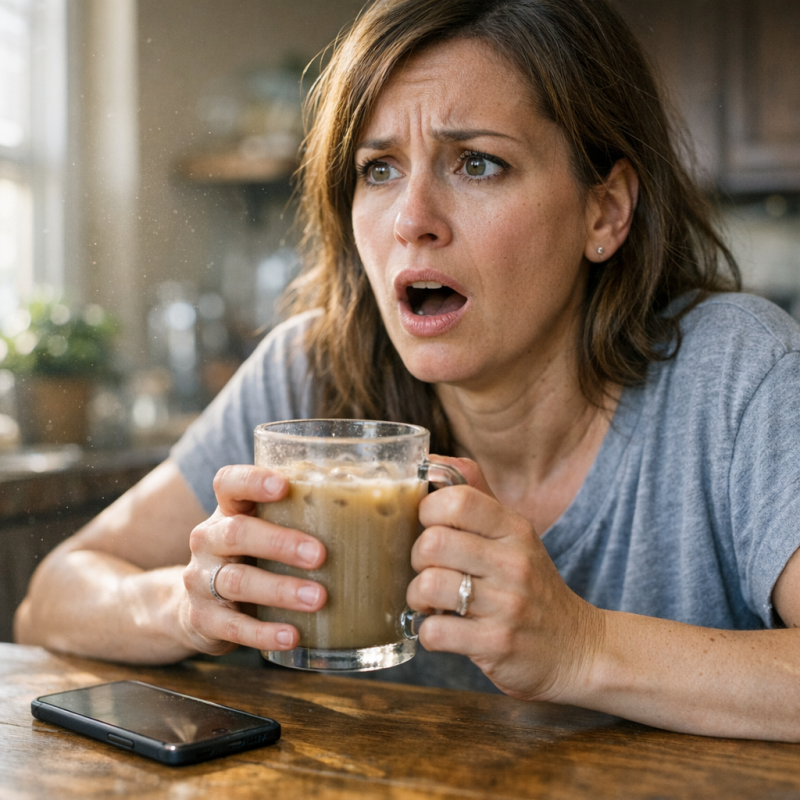 Image by FCT AI
The Night Before Knowing
I lay awake all night, staring at the ceiling while my mind assembled the pieces. Fake illness. Staged death. Abandoned children. Stolen money. Criminal partner. Every revelation had felt like a separate wound, but now they were merging into a single, terrible picture. Rachel hadn't just made bad choices. She'd orchestrated everything. The diagnosis, the tears, the guardianship papers, the funeral—all of it had been performance. Calculated and deliberate. I kept thinking about moments I'd dismissed at the time. How she'd never let me come to doctor's appointments. How she'd always steered conversations away from medical details. How quickly she'd pushed for me to become the kids' legal guardian. Red flags I'd explained away because I'd wanted to be helpful, to be the good friend. Around three in the morning, I got up and made tea I didn't drink. My hands were shaking. Everything felt different now, like looking at a familiar painting and suddenly seeing the hidden image underneath. The woman I'd known for years had been a stranger. Or worse, had never actually existed at all. I couldn't sleep, pieces clicking together in the dark—fake illness, staged death, abandoned children, stolen money—and I felt I was finally about to understand the whole terrible truth.
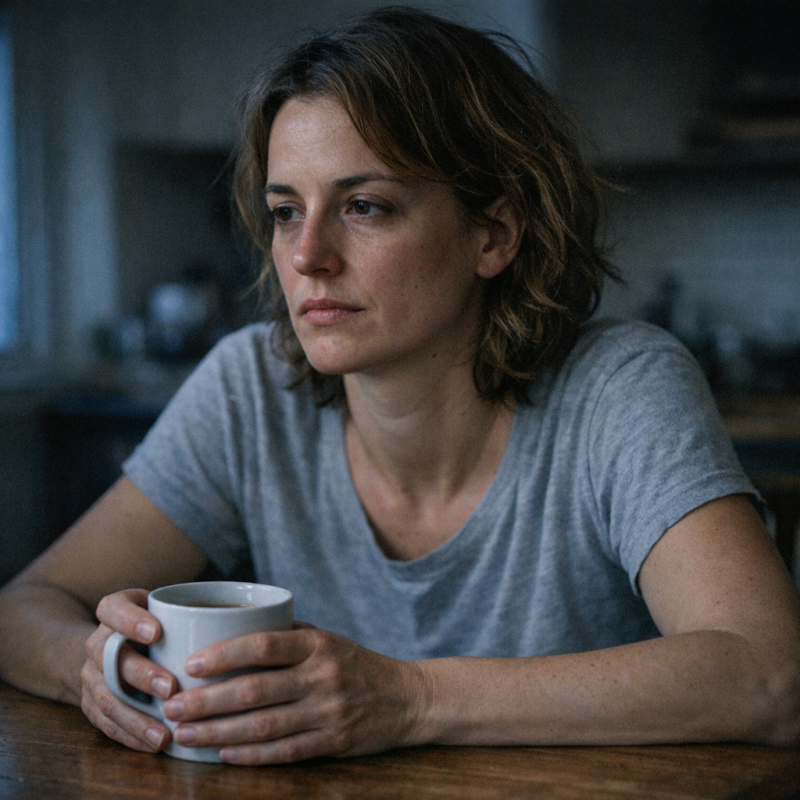 Image by FCT AI
The Complete Picture
Santos came over early with a briefcase full of files. He spread them across my kitchen table methodically, and I knew this was it. The moment when everything would finally make sense, even though I didn't want it to. 'I need you to hear this all at once,' he said gently. Then he walked me through it. Rachel had been with Marcus Brennan for at least two years—long before any cancer diagnosis. She'd been helping him move money, laundering it through various accounts. When authorities started closing in, she'd needed an exit strategy that included ditching her children without triggering a missing persons investigation. So she'd engineered everything. She'd noticed my infertility struggles and positioned herself closer to me. Built up the friendship deliberately. Then faked the cancer, knowing I'd be sympathetic. Manipulated me into becoming legal guardian so her kids would be cared for without her. Staged her death so thoroughly that no one would come looking for her. And then disappeared overseas with Brennan, free to start a new life while I raised the children she'd decided were inconvenient. Santos spread the files across my kitchen table and spoke the truth I'd been running from: Rachel had faked everything from the beginning, chosen me deliberately because I was infertile and desperate, manipulated our entire friendship to position me as the perfect guardian, and then disappeared overseas with a criminal partner—her children were never orphaned, they were abandoned.
 Image by FCT AI
Rage and Grief Collide
After Santos left, I stood in my kitchen staring at those files until the words blurred. Then the rage hit me like a physical force. I stumbled to my bedroom, locked the door, grabbed a pillow, and screamed into it until my throat was raw. The grief came next, crashing over the rage in waves. I'd loved her. I'd mourned her. I'd cried at her empty grave and promised to honor her memory by raising her children well. But there was no her to mourn. The Rachel I'd loved had never existed. Every coffee date, every late-night conversation, every vulnerable moment we'd shared—all of it was calculated. Engineered. She'd weaponized my pain. She'd watched me grieve my miscarriages and seen opportunity instead of suffering. She'd positioned herself as my closest friend while internally deciding I was useful enough to raise the children she no longer wanted. I pressed my face harder into the pillow and screamed again, this sound more animal than human. In the hallway, I heard Mason's footsteps pause outside my door, then retreat. I screamed into a pillow so the kids wouldn't hear, rage and grief tearing through me—Rachel had weaponized my infertility, my loneliness, my desperate need to be needed.
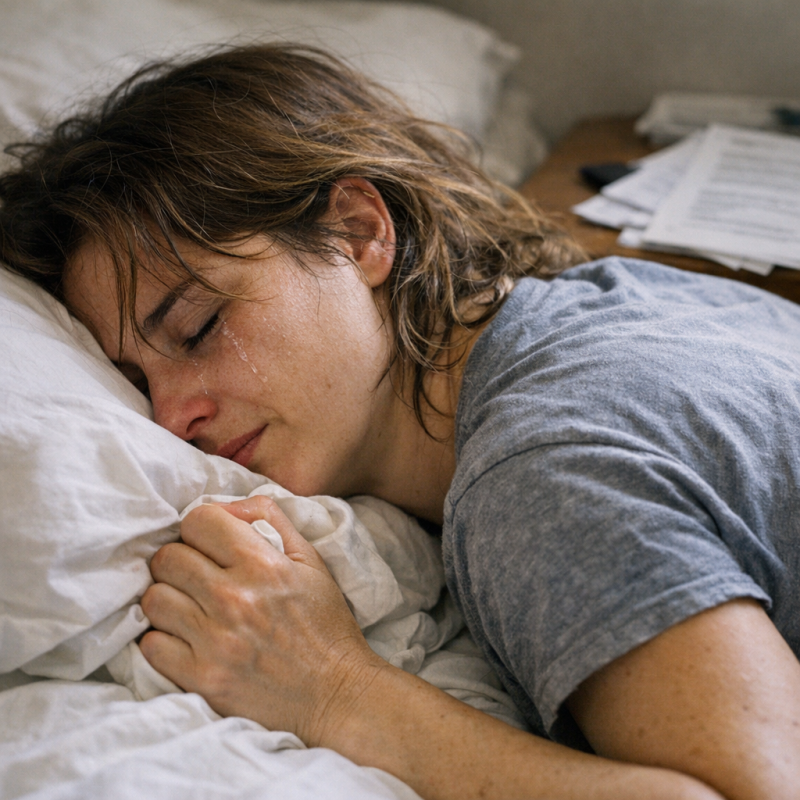 Image by FCT AI
Karen's Support
Karen came the next morning. I must have looked terrible because she immediately pulled me into a hug without saying anything. We sat at the kitchen table—I'd cleared away Santos's files the night before, couldn't stand looking at them—and she just let me talk. I unloaded everything. The betrayal. The manipulation. The sick feeling that my entire friendship had been a lie. 'You were her mark,' Karen said gently. 'You need to hear that clearly. She chose you because you were vulnerable and kind. That's on her, not you.' We talked for an hour about trauma and grief and how you could mourn something that never existed. Karen was practical too, explaining that the adoption process would continue, that Rachel's fraud didn't invalidate my legal guardianship. Then she went quiet for a moment, her expression serious. 'I need to ask you something,' she said. 'And I need you to be completely honest with me and yourself.' She folded her hands on the table. 'Do you still want to keep them, knowing all this?' The question hung between us, and I realized my answer hadn't changed.
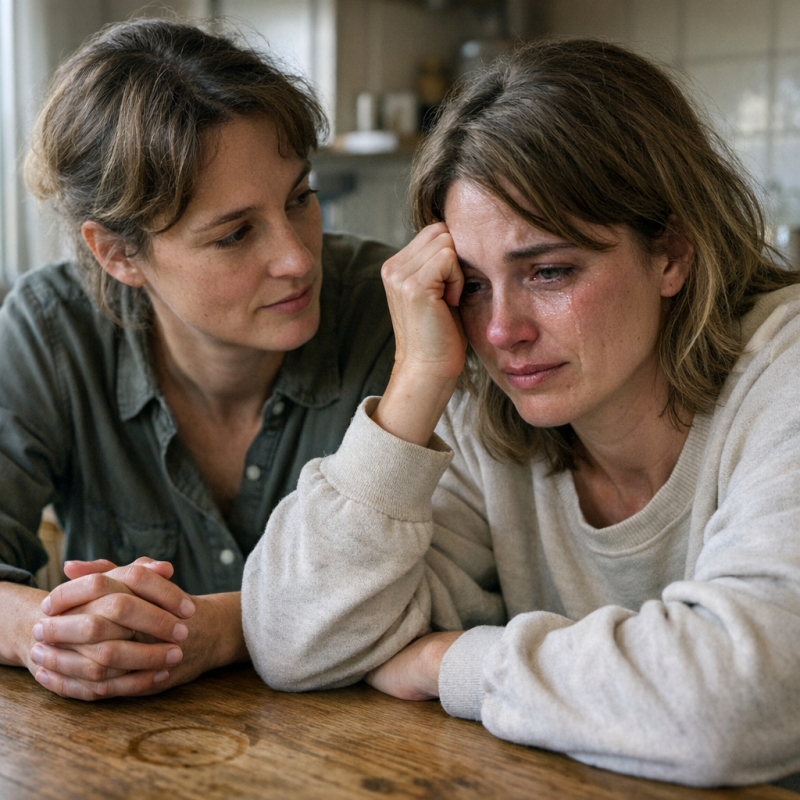 Image by FCT AI
International Manhunt
Santos called two days later with an update. Interpol was involved now. The FBI had connected with law enforcement agencies in six countries. Rachel and Marcus Brennan had left behind a trail—financial transactions, border crossings, surveillance footage from airports. 'It's significant,' Santos told me, his voice carrying a kind of grim energy. 'They moved money through accounts in the Caymans, Switzerland, and Portugal. Used fake passports to cross borders. Left digital breadcrumbs everywhere because they thought they were smarter than they actually were.' I listened, gripping the phone tighter. The scale of it was staggering. This wasn't just a woman who'd faked cancer and abandoned her kids. This was international crime. Money laundering. Fraud across multiple jurisdictions. 'How long until you find her?' I asked. Santos hesitated. 'Hard to say. But we're coordinating with Portuguese authorities, Spanish police, French intelligence. She's burned through cash quickly, made mistakes. We're closer than we were yesterday.' I felt something dark and satisfied settle in my chest. Santos said they'd tracked Rachel to three countries in two months—she was running, always running, and they were closing in.
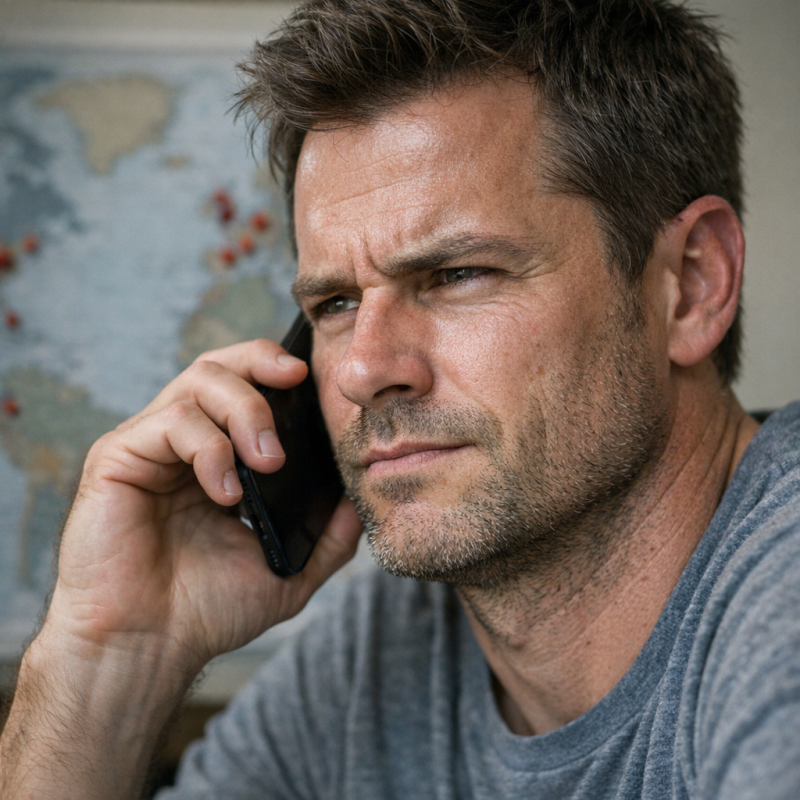 Image by FCT AI
Mason Asks the Hard Question
Mason had been quieter than usual. Not withdrawn exactly, but watchful. I'd catch him staring at me during dinner, his eyes too knowing for a nine-year-old. A week after Santos's call, he found me in the living room after Lily was asleep. He sat on the couch beside me, fidgeting with the hem of his shirt. 'Jenna?' His voice was small. 'Can I ask you something?' My stomach dropped. 'Of course, sweetheart.' He picked at a loose thread, not meeting my eyes. 'The detective keeps coming here. And you've been sad. Like, really sad. Not the same as when Mom died.' I waited, barely breathing. He looked up at me then, and his expression was so much older than it should have been. 'And you've been talking to Karen a lot. About us.' He swallowed hard. 'Something's different. I can feel it.' I wanted to deflect, to protect him, but the lie stuck in my throat. Mason looked me in the eye and asked, 'Is Mom really dead?'—and I had to decide whether to protect him with lies or prepare him with truth.
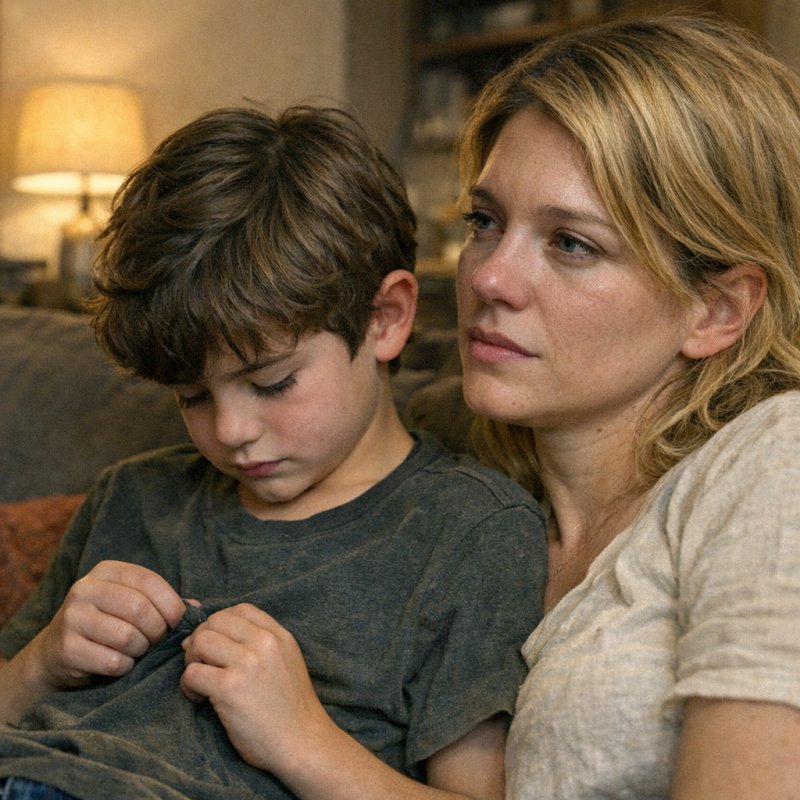 Image by FCT AI
Telling Mason the Truth
I took a breath and reached for his hand. 'No,' I said quietly. 'She's not dead.' Mason went very still. I chose my words carefully, keeping my voice steady even though I was breaking inside. 'Your mom made some choices that hurt a lot of people. She got involved with someone who was doing bad things, and she helped him. The police are looking for her now.' His eyes filled with tears. 'So she left us on purpose?' The rawness in his voice destroyed me. 'Yes,' I whispered. 'I'm so sorry, Mason. Yes, she did.' I explained it as gently as I could—that she'd faked being sick, that she'd planned everything, that she'd left the country. I didn't tell him about the manipulation or the money laundering details. Just that she'd chosen to disappear and start a new life somewhere else. Mason processed this silently, tears streaming down his face. Then he asked the question that absolutely shattered me. 'Didn't she love us?' I pulled him close, holding him while he cried. I told Mason his mother was alive but had made choices that meant she couldn't come back, and he asked the question that broke me: 'Didn't she love us?'
Rachel Located
Santos called on a Tuesday afternoon. I was helping Lily with homework when my phone buzzed. I stepped into the kitchen to answer. 'Jenna.' His voice had a different quality—sharp, satisfied, almost triumphant. 'We found her.' My knees went weak. I gripped the counter. 'Where?' 'Portugal. Lisbon. She was using a fake passport, living in a rental apartment near the coast. Local police picked her up this morning based on our warrant. She's in custody.' I couldn't speak for a moment. The relief was physical, flooding through me like warmth. 'And Brennan?' 'Got him too. Same location. They were still together.' Santos continued with details—the arrest had gone smoothly, no resistance, they'd seized laptops and phones and financial documents. Evidence everywhere. Extradition paperwork was already being filed. I pressed my hand to my mouth, emotions swirling. Vindication. Anger. A strange kind of grief. 'What happens now?' I asked. 'Now she answers for what she did,' Santos said. His voice was tight with satisfaction when he called—'We found her. She's in custody in Portugal.'
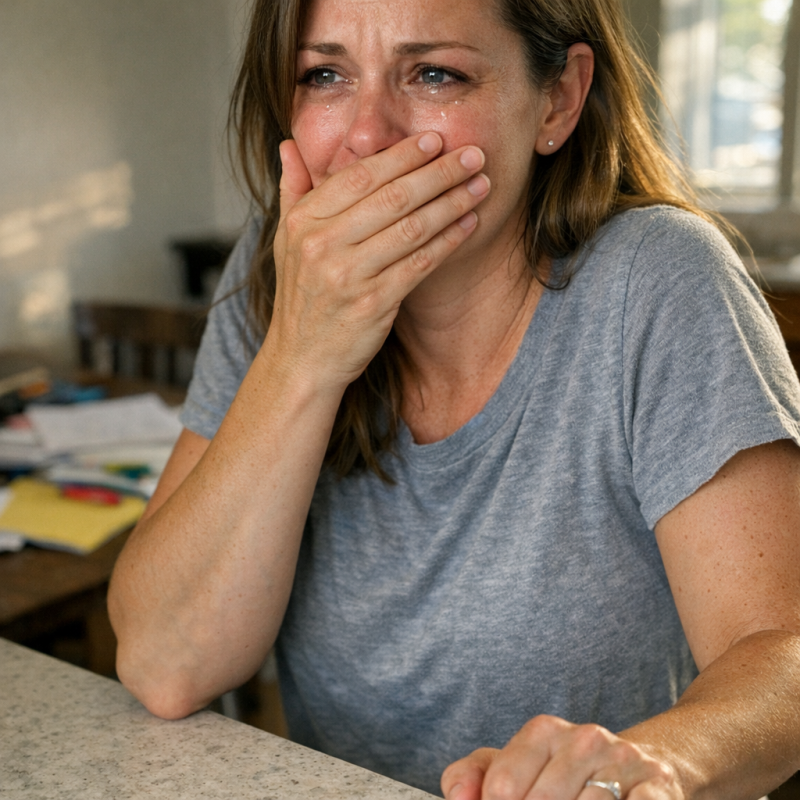 Image by FCT AI
The Extradition Process
The legal process moved slowly. Santos kept me updated—Rachel had hired a Portuguese lawyer who was fighting the extradition. There were hearings, paperwork, bureaucratic delays across international systems. 'It'll take time,' Santos warned me. 'But she can't run anymore. That's what matters.' Weeks passed. I tried to focus on the kids, on establishing normal routines, on moving forward. Then Santos called with an update that made my blood boil. 'She's claiming coercion,' he said, disgust evident in his tone. 'Her lawyer's arguing that Brennan manipulated her, that she was afraid for her life, that she's actually a victim in all this.' I almost laughed. Of course she was. Of course Rachel would twist the narrative, play the victim, manipulate even from across the ocean. 'Is anyone buying it?' I asked. 'The Portuguese judge seems skeptical,' Santos said. 'Especially given the evidence of her active participation in the money laundering. But it's slowing things down.' I felt the familiar anger rising. Rachel was fighting extradition, claiming she'd been coerced and was a victim herself—even from across the ocean, she was still lying.
 Image by FCT AI
The Video Message
Her lawyer sent the video file through official channels. Santos called to warn me it was coming, asked if I wanted to watch it. I shouldn't have. I knew I shouldn't have. But I clicked play anyway. Rachel's face filled my laptop screen, and I barely recognized her. She looked thinner, older, her hair different. She was crying, tears streaming down her face as she spoke directly to the camera. 'Jenna, I know you must hate me. I understand that. But I need you to know why I did this.' Her voice trembled with emotion that looked so genuine I wanted to throw my laptop across the room. She talked about being trapped, about fearing for her life, about Brennan's control over her. 'I wanted my children to have stability, safety, a mother who could actually be there for them,' she said, her voice breaking. 'I knew you'd give them everything I couldn't. I did this for them, Jenna. To give them a better life.' I stared at the screen, numb with rage. Every word was calculated. Every tear was performance. Rachel's face filled the screen, tears streaming, voice trembling as she claimed she'd done it all 'to give them a better life'—manipulation dressed as sacrifice.
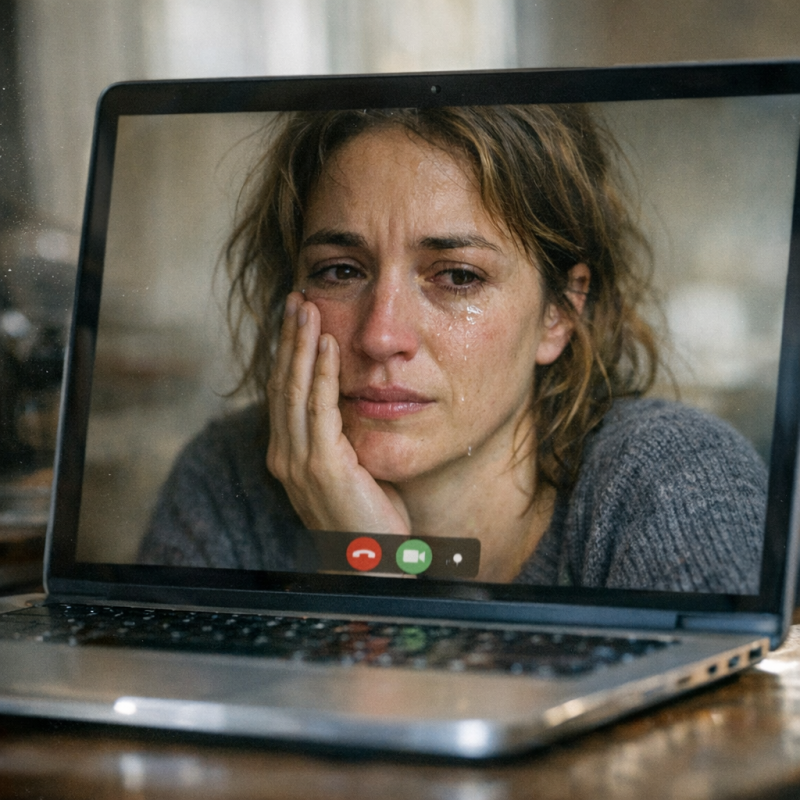 Image by FCT AI
No Contact Decision
I sat at my kitchen table, laptop open in front of me, staring at the video file. Santos had sent instructions for responding to Rachel's lawyer, templates for limited contact arrangements. My finger hovered over the trackpad. Rachel's lawyer was already pushing for video calls with the kids, supervised visits once she finished whatever rehab program she'd supposedly started. They were framing it as 'maintaining the parent-child bond,' like she hadn't shattered that bond herself when she faked her own death. I thought about Mason asking why his mom lied. About Ellie's nightmares. About the months of grief counseling and trauma therapy still ahead of us. Rachel had orchestrated this entire nightmare for her own purposes, whatever they were. She'd used her children as pawns, used me as a convenient solution, and now she wanted back in? To what—destabilize them further whenever it suited her? My hand moved across the trackpad. I deleted the video without watching it again and blocked her lawyer's number—Rachel had taken enough from me, she wouldn't get another second.
 Image by FCT AI
Adoption Finalization
The courtroom was smaller than I expected, nothing like TV shows. Mason sat on one side of me, Ellie on the other, both wearing their nicest clothes. Karen sat behind us, tissues already in hand. The judge reviewed our case—the guardian ad litem's report, the kids' therapy records, my financial documentation, everything Santos had carefully prepared. 'Given the exceptional circumstances,' the judge said, looking over her glasses at us, 'and the biological mother's voluntary termination of parental rights, I see no reason to delay.' Mason squeezed my hand. Ellie swung her legs, too short to reach the floor. The judge asked if I understood the lifelong commitment I was making, and I said yes without hesitation. She asked if Mason and Ellie wanted this adoption, and they both nodded solemnly. Karen was crying openly behind us. The whole thing took maybe twenty minutes. Twenty minutes to legally become what I'd already become in practice—their mother. The judge signed the final papers, and Mason and Ellie became mine—not because Rachel died, but because she chose to disappear.
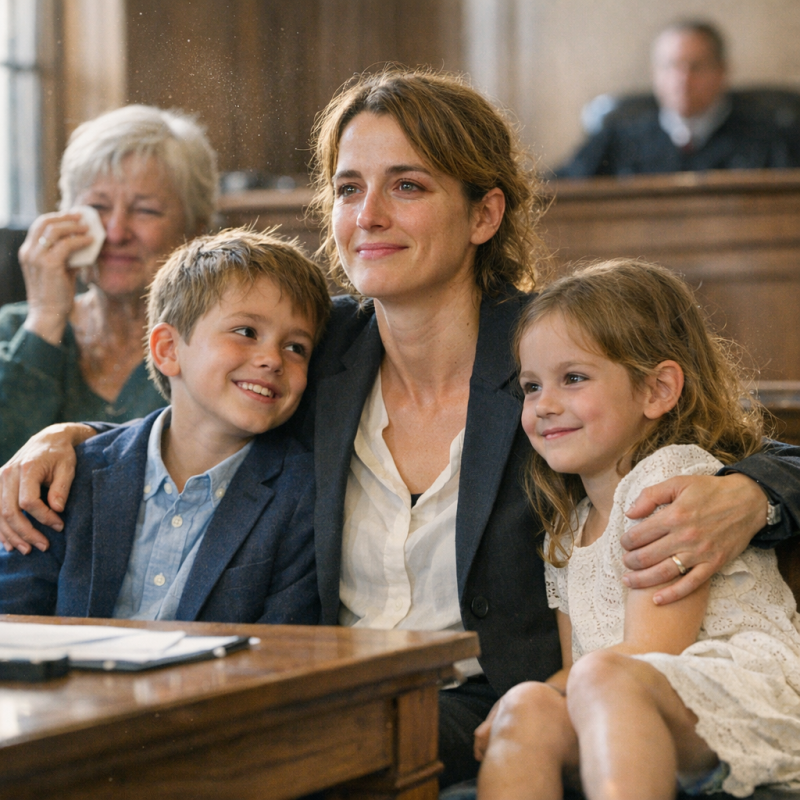 Image by FCT AI
Building Real Family
We started building our own traditions after that. Friday movie nights where we actually picked films we all enjoyed, not just what I thought grieving kids should watch. Saturday morning pancakes where Mason got to flip them and Ellie got to add way too many chocolate chips. Small things, normal things, the kind of family routines I'd always imagined but never quite believed I'd have. Mason's grades improved once he wasn't carrying around the weight of his mother's 'death.' He joined the school robotics club. Started smiling more easily. Ellie's nightmares became less frequent, though she still crawled into my bed some nights. We talked about Rachel sometimes, in therapy, in quiet moments. I never lied to them about what happened. They deserved the truth, or at least the age-appropriate version. One evening, Ellie was helping me make dinner, standing on her step stool at the counter. She looked up at me, tomato sauce on her chin, completely casual. 'Can I call you Mom?' she asked. No tears, no dramatic moment. Just a choice. Ellie asked if she could call me Mom, and this time there were no tears—just a little girl choosing her family, the way her mother never did.
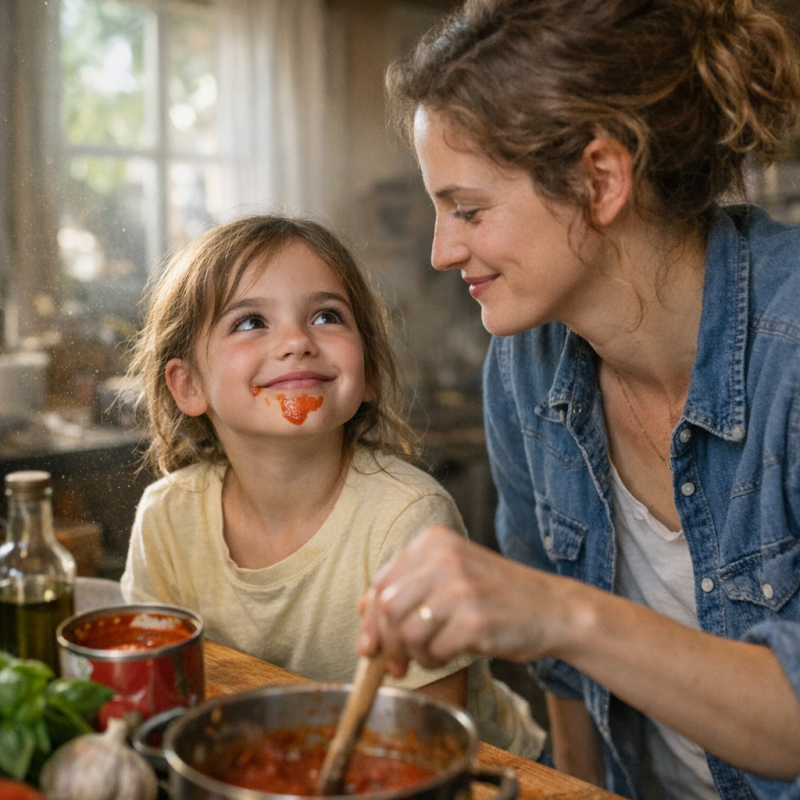 Image by FCT AI
Reflections on Motherhood and Betrayal
Sometimes I still think about that first conversation in the hospital when Rachel told me she was dying. How genuine her tears seemed. How completely I believed her. Part of me will probably always wonder what was real and what was performance, where Rachel's actual emotions ended and her manipulation began. The betrayal still stings in quiet moments—when I'm signing permission slips as 'Mother,' when someone mentions Mason and Ellie look so much like me even though they don't, when I realize I'm living the life Rachel handed me like a script she'd written. But then Mason shows me something he built in robotics club, his face glowing with pride. Ellie falls asleep during our movie nights with her head on my shoulder. We have inside jokes. We have routines. We have real love, the kind that grows from showing up every day, not from biology or obligation. People ask if I regret adopting Mason and Ellie after everything that happened, and I never know how to answer—because Rachel betrayed me in the cruelest way imaginable, but those children became my real family, and somehow, out of all that deception, I found the motherhood I'd been searching for all along.
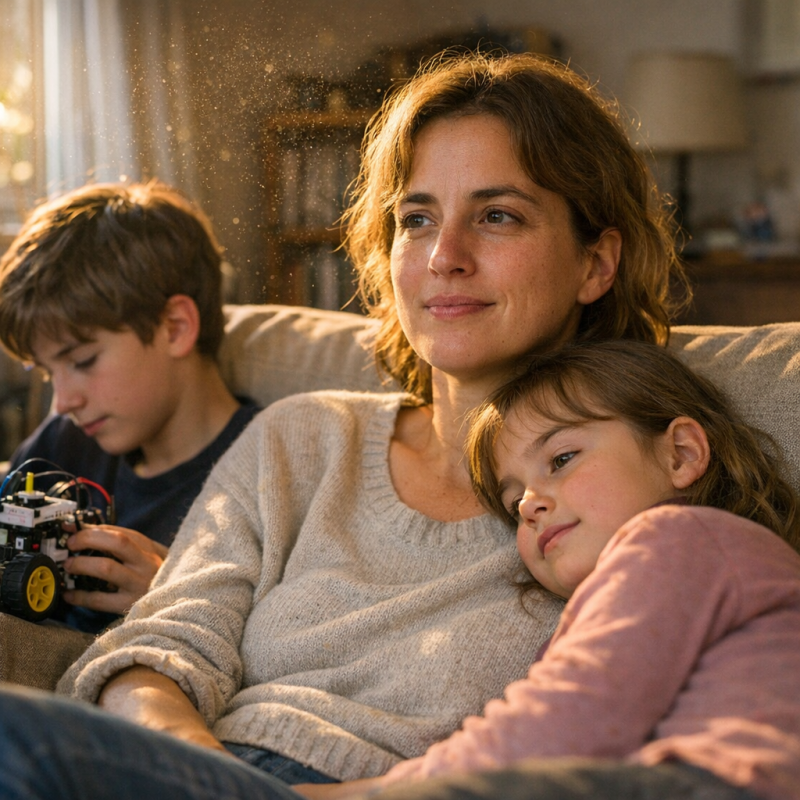 Image by FCT AI