
If every billionaire gave back just 5% of their wealth each year, could we end poverty in America?

If every billionaire gave back just 5% of their wealth each year, could we end poverty in America?


February 23, 2026 | Jesse Singer

If every billionaire gave back just 5% of their wealth each year, could we end poverty in America?


End Poverty?

There are fewer than a thousand people in America who control an almost unimaginable amount of wealth. What if each of them gave up just a tiny slice of it every year? Actually, not even a slice—a sliver of that massive wealth. Would that be enough to wipe out poverty entirely?

Elon MuskWikicommons

Advertisement

How concentrated is wealth in America?

The top 1% of U.S. households hold roughly one-third of the nation’s total wealth. Billionaires sit at the very top of that pyramid. Extreme wealth concentration isn’t abstract—it’s measurable.

File:Elon Musk (12271217906).jpgTesla Owners Club Belgium, Wikimedia Commons

Advertisement

How much wealth are we talking about?

Recent estimates place total U.S. billionaire wealth somewhere between roughly $6 and $8 trillion, depending on market swings. That number rises and falls with stock prices—but it firmly sits in multi-trillion-dollar territory.

How Investment Gains Grow Inside A Roth IRAKampus Production, Pexels

Advertisement

Don’t billionaires already avoid a lot of taxes?

Many ultra-wealthy Americans legally minimize taxes through provisions built into the code. Because much of their wealth grows through unrealized stock gains, it isn’t taxed until assets are sold. Investigations have shown that some billionaires pay very low effective rates relative to their total wealth growth.

Why 401(k) Investment Menus Are LimitedVitaly Gariev, Unsplash

Advertisement

What about illegal tax evasion?

The IRS estimates the total U.S. tax gap—taxes owed but not paid—is roughly $600–$700 billion per year. High-income households account for a disproportionate share of underreported income. Stronger enforcement at the top could recover tens of billions annually.
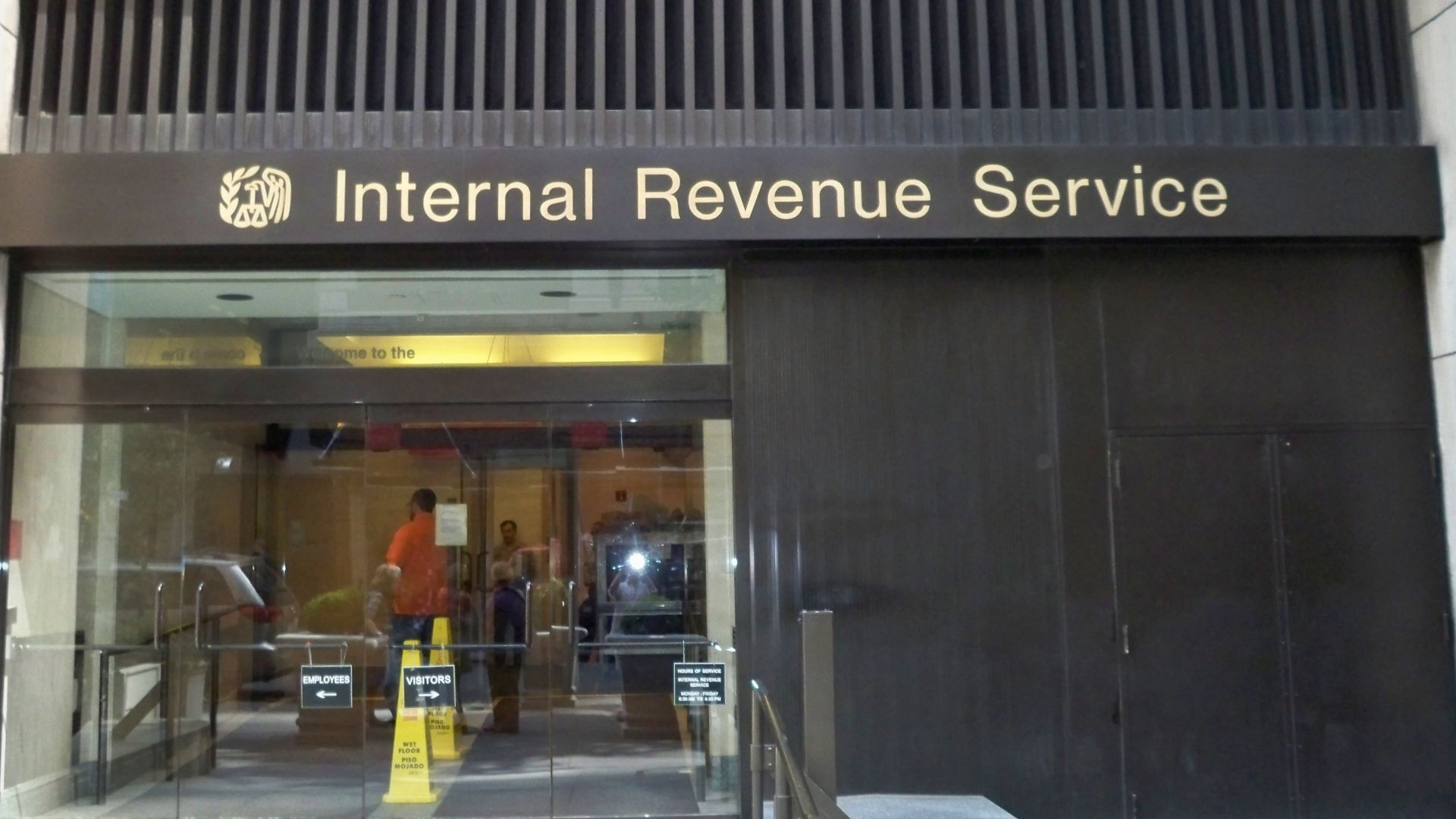
File:NYC IRS office by Matthew Bisanz.JPGMBisanz talk, Wikimedia Commons

Advertisement

What if major loopholes were closed?

Proposals to eliminate stepped-up basis at death, limit offshore shelters, and tighten capital gains rules are often estimated to raise roughly $100–$200 billion per year. That wouldn’t come solely from billionaires—but they would likely represent a significant share.

August de RichelieuAugust de Richelieu, Pexels

Advertisement

Now, what does 5% actually equal?

Five percent of $6–8 trillion would equal roughly $300–$400 billion per year of recurring revenue. A small percentage of enormous wealth becomes one of the largest potential annual funding streams in the country.

Photo of Accountant working on desk using calculatorlovelyday12, Adobe Stock

Advertisement

What is 5% to a Billionaire?

For someone worth $20 billion, giving up 5% means paying $1 billion—and (doing some quick math) still keeping $19 billion. For someone worth $50 billion, they’d retain $47.5 billion. Their lifestyle and long-term financial security would remain intact.

Counting moneyTima Miroshnichenko, Pexels

Advertisement

How many Americans live in poverty?

According to the U.S. Census Bureau, about 36–37 million Americans live below the official federal poverty line in a typical year—roughly 11% of the population.

File:Census Bureau headquarters, Suitland, Maryland, 2007.jpgUnited States Census Bureau / Oficina del Censo de los Estados Unidos, Wikimedia Commons

Advertisement

Children are hit even harder

Child poverty rates are typically higher than overall poverty rates. In 2021, the expanded Child Tax Credit reduced child poverty by roughly 40% while payments were active—demonstrating how strongly policy can move the numbers.

Muhammad Al BazzarMuhammad Al Bazzar, Pexels

Advertisement

What is the poverty line, exactly?

In 2024, the federal poverty threshold for a family of four was a little over $30,000. For a single adult, it’s in the mid-to-high teens. It measures basic subsistence—not economic comfort.

A Family Sitting on the PatioJulia M Cameron, Pexels

Advertisement

What does it cost to close the poverty gap?

Economists measure the poverty gap—the total dollars needed to lift everyone up to the poverty line. Recent estimates typically place that figure somewhere between roughly $170 billion and $250 billion per year.

The image shows a man with short brown hair, a beard, and round-framed glasses sitting at a desk and working on a laptopTima Miroshnichenko, Pexels

Advertisement

So could $300–$400 billion cover it?

On paper, yes. If the annual poverty gap sits around $170–$250 billion, a 5% wealth contribution generating $300–$400 billion per year could theoretically close it—with room remaining.

Borrowing moneyKarola G, Pexels

Advertisement

But poverty is dynamic

People move in and out of poverty every year. Job loss, illness, or rising housing costs can push families below the line. Even if you close the gap this year, it must be addressed again next year. But remember, this is an annual revenue stream.

Sad Fired / Let Go Office Worker  in suit Packs His Belongings into Cardboard BoxGorodenkoff, Shutterstock

Advertisement

Would people improve enough to not need help later?

Evidence from guaranteed income pilots suggests predictable cash can reduce income volatility and modestly improve employment stability. Greater financial stability can make it easier to secure childcare, pursue training, or search for better work.

Focused young businessman auditing revenue report and planning budgetMoon Safari, Adobe Stock

Advertisement

Could poverty shrink over time?

Possibly. Some families could permanently move above the poverty line with sustained support, reducing long-term costs. But structural pressures—housing shortages, healthcare costs, wage gaps—don’t disappear automatically.

The Coldest Doctorscottonbro studio, Pexels

Advertisement

Poverty isn’t only about income

Closing the income gap helps, but poverty is also driven by systemic forces. Addressing those alongside income support would determine whether reductions are temporary or lasting.

Teachers Vs Dumb ParentsDiva Plavalaguna, Pexels

Advertisement

How big is $300–$400 billion compared to federal spending?

The entire U.S. federal budget is roughly $6–$7 trillion per year. Major programs like Social Security and Medicare each exceed $1 trillion annually. So $300–$400 billion is enormous—but not unprecedented at the national level.

Doctor Writing on a Medical ChartRDNE Stock project, Pexels

Advertisement

So could 5% end poverty?

If sustained, a 5% annual wealth contribution could plausibly close the official poverty gap. That’s more financially realistic than many people assume.

Cash Inventory And WorkflowTima Miroshnichenko, Pexels

Advertisement

But ending poverty is stronger than closing a gap

Eliminating poverty permanently would require durable funding, smart program design, and structural reforms alongside income support. But even a small percentage from the ultra-wealthy could dramatically reduce hardship for millions of Americans.

Young stock exchange trader working in officeAfrica Studio, Adobe Stock

The bottom line

Five percent sounds small. At trillions of dollars, it isn’t. And the math makes one thing clear: even a modest shift in extreme wealth could move the needle in a very big way.

couple sitting together at a tableMikhail Nilov, Pexels

Advertisement

You Might Also Like:

How To Pick Stocks, According To Warren Buffett

22 Rare Vinyl Records Worth Big Money

The Most Bizarre Things That Sold High At Auctions

Sources:  123


READ MORE

Woman worried about renovations

I want to renovate our kitchen before selling to increase the home’s value, but my husband says we won’t recoup the cost. Is he right?

You’re about to sell, and your instinct is clear: update the kitchen, boost the value, sell for more. Your partner, on the other hand, says you’ll spend a fortune and never get it back. So, who’s right?
February 25, 2026 Quinn Mercer
Woman concerned about pay app

I was tricked into sending money through an app, but my bank won’t dispute the charge because I “authorized” it. Is there any way to get my money back?

You didn’t get hacked. You didn’t have your card stolen. You sent the money yourself, because someone convinced you to. Now the bank says the charge was authorized, so there’s nothing they can do. Unfortunately, this is one of the hardest types of fraud to reverse, but “hard” doesn’t mean “impossible”.
February 25, 2026 Peter Kinney
Nfts - Fb

I took out a $20,000 loan to buy NFTs. They’re now worthless. Can I claim that as a loss?

Taking out a $20,000 loan to buy NFTs once seemed like a calculated risk in a booming digital market. Now those tokens are effectively worthless, leaving the borrower with debt and few options. The central question becomes whether this financial loss can be realized and claimed as a capital loss, typically requiring a sale or proof of worthlessness/abandonment under IRS rules. NFTs sit at the intersection of emerging technology and established financial law, creating uncertainty about how losses are treated. Traditional lending rules still apply to the loan, yet digital assets operate in volatile markets with evolving regulations. The tension between innovation and established legal frameworks makes recovery complicated.
February 25, 2026 Marlon Wright
Woman using mobile phone

I transferred $15,000 between my accounts, and the bank placed a hold on the money to "review" it. It's my own money, why are they doing this to me?

Moving money between accounts feels simple until a hold appears on funds already yours. Federal banking regulations require financial institutions to monitor large transactions regardless of ownership. Anti-money laundering laws created this reality for everyone.
February 25, 2026 Miles Brucker
Woman holding credit card

Don’t Close That Old Credit Card—Even If You Never Use It

Cleaning up your finances feels productive. You pay off a credit card, stop using it, and decide it’s time to close it. Logical, right? Not always. That old card you never touch could quietly be helping you more than you realize.
February 25, 2026 Jesse Singer
Woman using an ATM

Even if you aren't doing anything wrong, the IRS may come after you if they notice a pattern of repeated, small deposits.

Most people assume small cash deposits are invisible to the government. They're not. A pattern of modest deposits can set off a federal investigation, freeze your account, and in some cases, cost you everything, without a single criminal charge.
February 25, 2026 Miles Brucker


Disclaimer

The information on MoneyMade.com is intended to support financial literacy and should not be considered tax or legal advice. It is not meant to serve as a forecast, research report, or investment recommendation, nor should it be taken as an offer or solicitation to buy or sell any securities or adopt any particular investment strategy. All financial, tax, and legal decisions should be made with the help of a qualified professional. We do not guarantee the accuracy, timeliness, or outcomes associated with the use of this content.


Dear reader,


It’s true what they say: money makes the world go round. In order to succeed in this life, you need to have a good grasp of key financial concepts. That’s where Moneymade comes in. Our mission is to provide you with the best financial advice and information to help you navigate this ever-changing world. Sometimes, generating wealth just requires common sense. Don’t max out your credit card if you can’t afford the interest payments. Don’t overspend on Christmas shopping. When ordering gifts on Amazon, make sure you factor in taxes and shipping costs. If you need a new car, consider a model that’s easy to repair instead of an expensive BMW or Mercedes. Sometimes you dream vacation to Hawaii or the Bahamas just isn’t in the budget, but there may be more affordable all-inclusive hotels if you know where to look.


Looking for a new home? Make sure you get a mortgage rate that works for you. That means understanding the difference between fixed and variable interest rates. Whether you’re looking to learn how to make money, save money, or invest your money, our well-researched and insightful content will set you on the path to financial success. Passionate about mortgage rates, real estate, investing, saving, or anything money-related? Looking to learn how to generate wealth? Improve your life today with Moneymade. If you have any feedback for the MoneyMade team, please reach out to [email protected]. Thanks for your help!


Warmest regards,

The Moneymade team